Curated Collections · 30 artworks · Created April 13, 2026

The Cinder's Edge

Where the incandescent glow of the ember meets the silent beauty of the ash

Read it as a book

Download the set in 4K — or open it in the MP Art app to send straight to your Frame

The Cinder's Edge

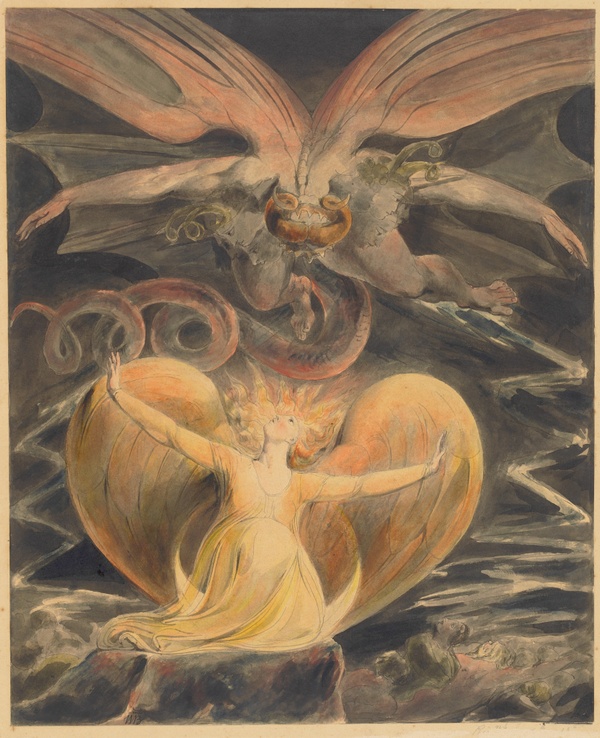
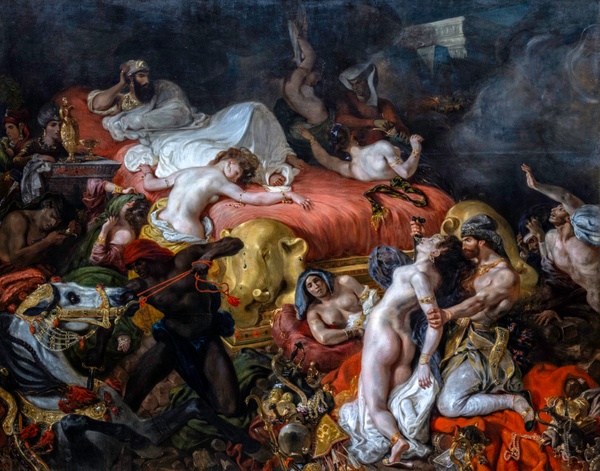
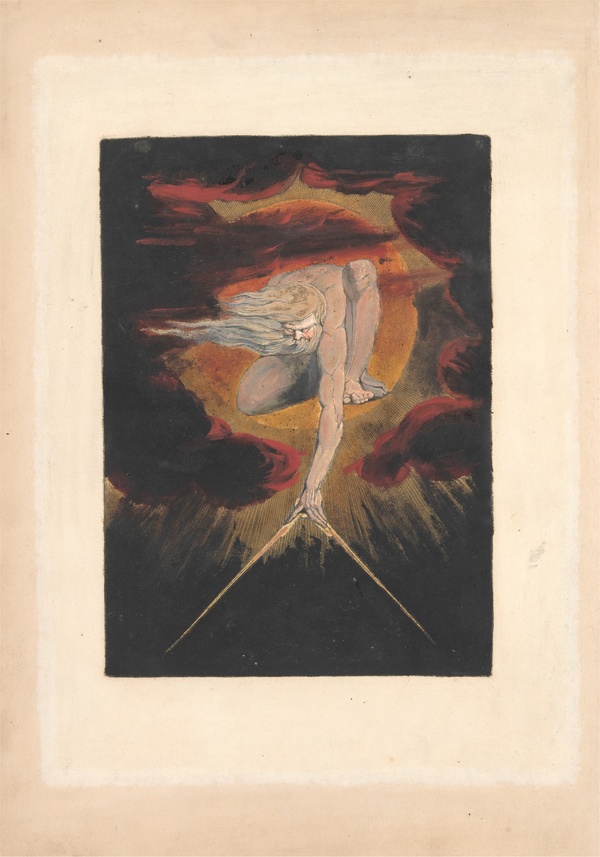
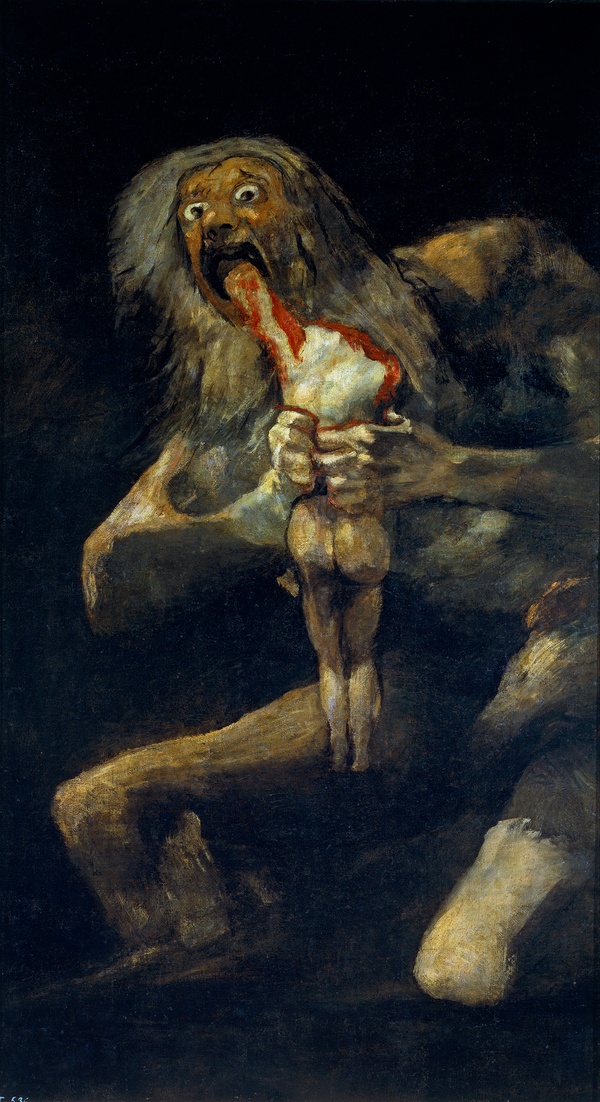
To stand at the cinder’s edge is to witness the moment where creation and collapse are indistinguishable. We begin with the cosmic spark in Europe. A Prophecy, Plate 1, Frontispiece ("The Ancient of Days") - William Blake (1794), where a divine architect measures the void with a compass made of light. Yet, this celestial order is constantly threatened by primal hunger, seen in the terrifying gaze of Saturn Devouring His Son - Francisco Goya (1820-1823) and the monstrous power of The Great Red Dragon and the Woman Clothed with the Sun - William Blake (c. 1805). Even human luxury is not immune to the flame, as evidenced by the decadent ruin of Death of Sardanapalus - Eugène Delacroix (1827).
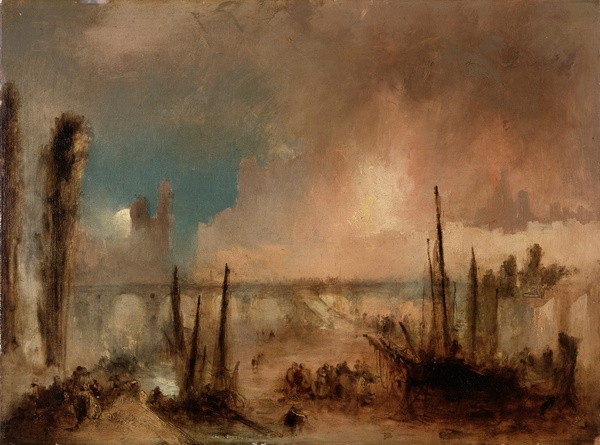
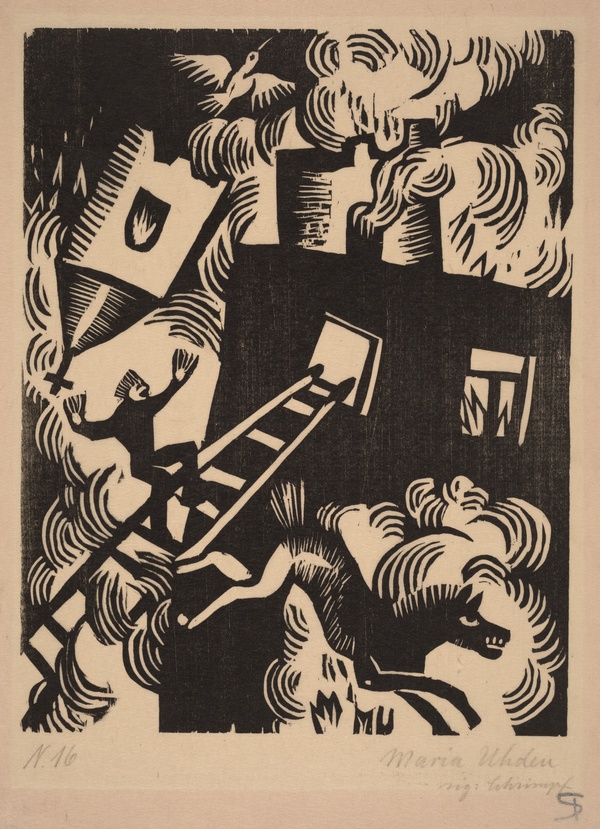
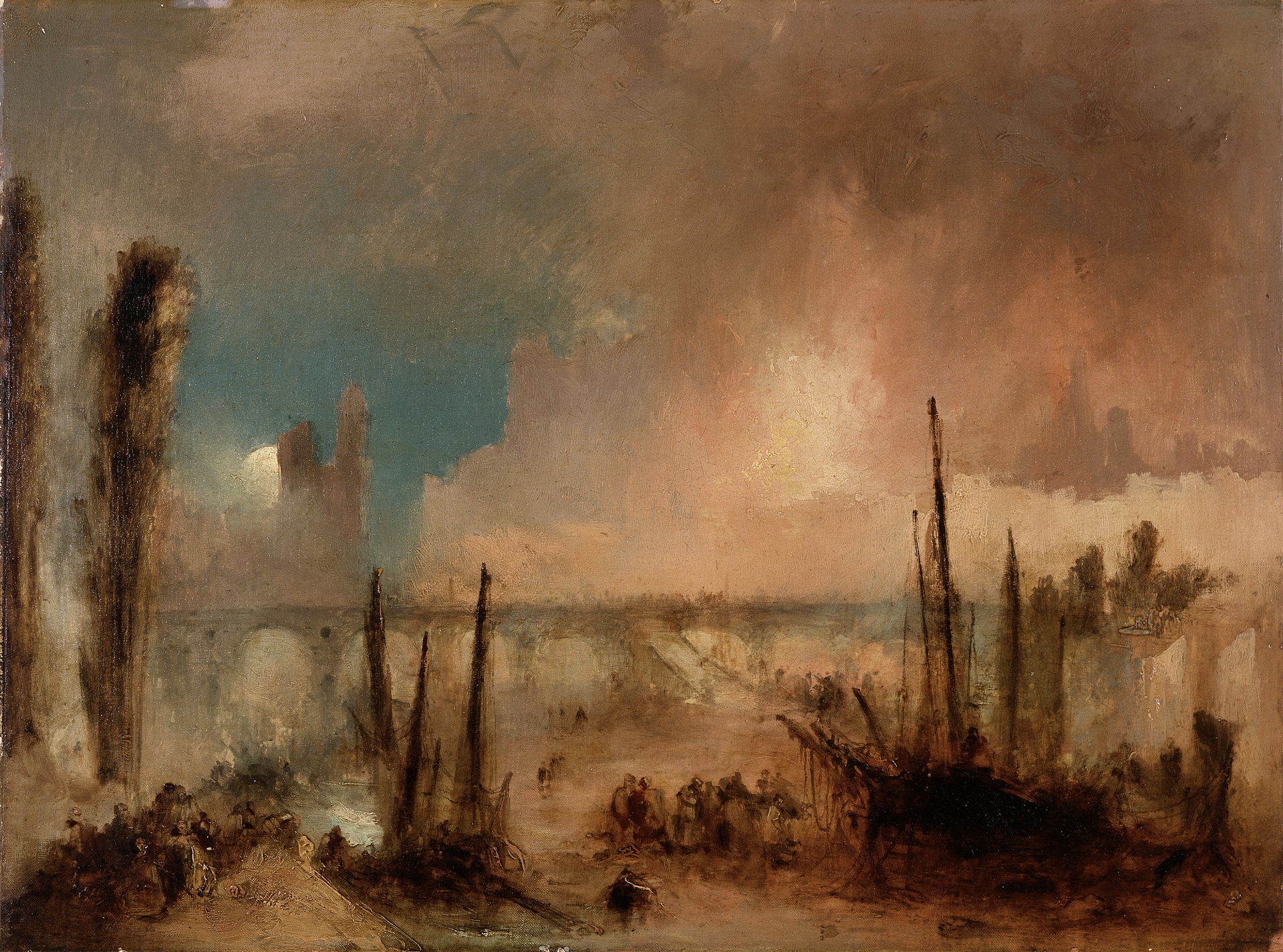
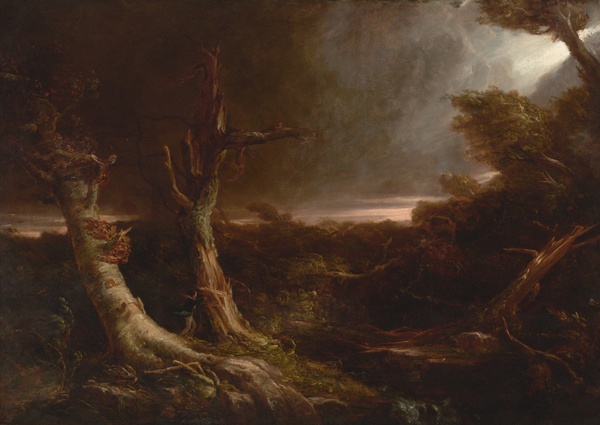
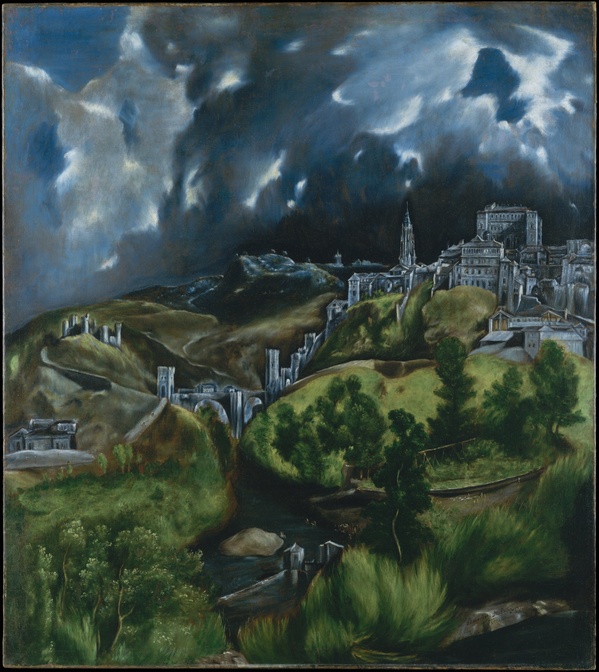
The natural world reflects this inner volatility. We see it in the swirling chaos of Tornado in an American Forest - Thomas Cole (1831) and the electric, bruised sky of View of Toledo - El Greco (c. 1598-1600). When the fire reaches our cities, it becomes a spectacle of awe, such as the Burning of the Houses of Parliament (October 6, 1834) - J.M.W. Turner (1834–1835) or the distant, smoldering glow of Neubrandenburg on Fire - Caspar David Friedrich (c. 1834). In the frantic lines of Burning House - Maria Uhden (1918), the shelter of the domestic sphere finally dissolves.
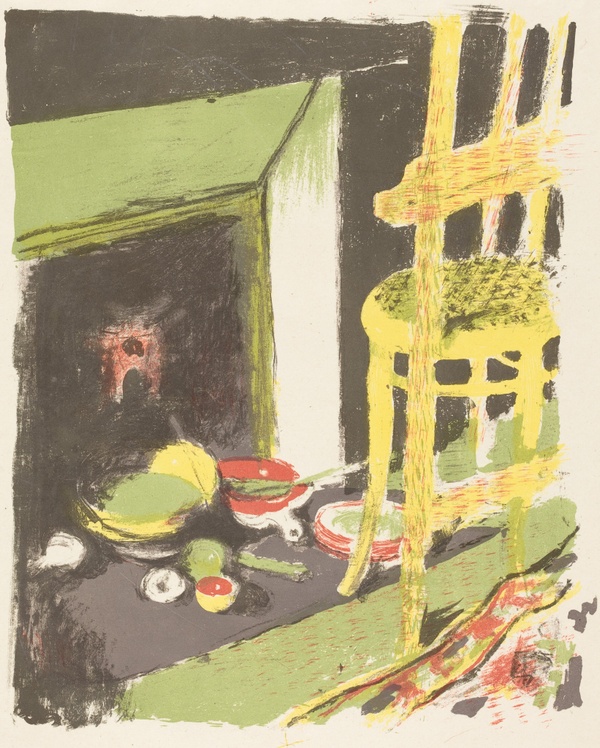
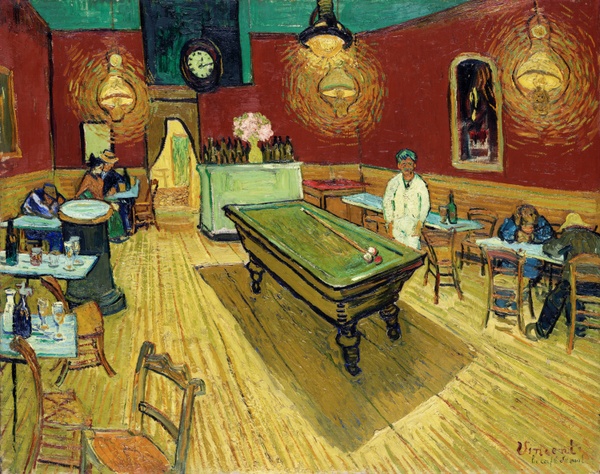
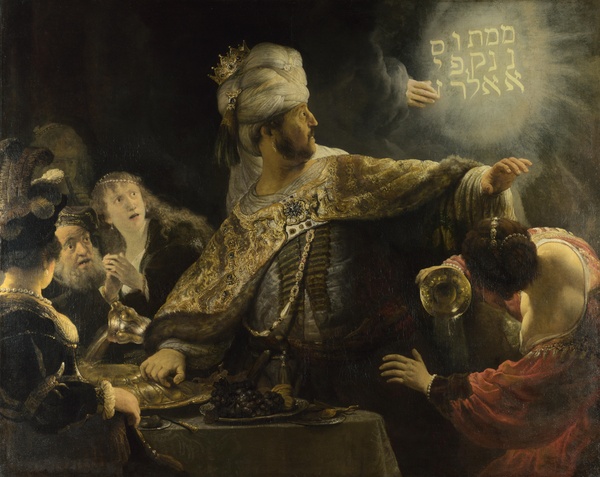
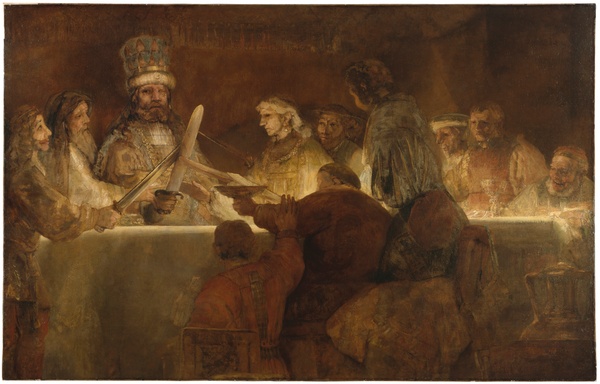
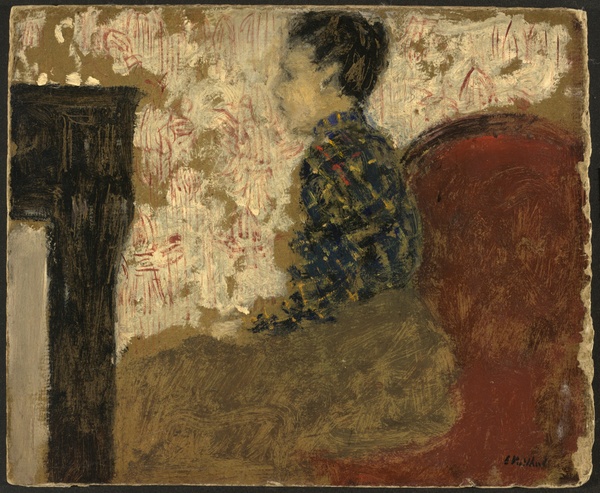
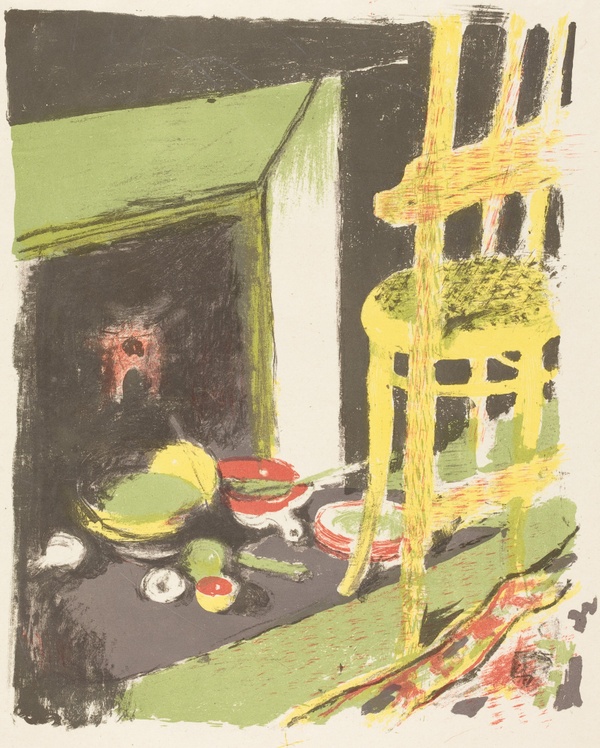
Yet, there is a quieter heat found indoors. We find a meditative stillness in Woman Sitting by the Fireside - Édouard Vuillard (ca. 1894), mirrored by the intimate, patterned warmth of The Hearth (L'Âtre) - Édouard Vuillard (1899) and The Hearth (L'Atre) - Édouard Vuillard (1899). These small embers contrast with the social anxieties of Le café de nuit (The Night Café) - Vincent van Gogh (1888) or the divine judgement inscribed in light in Belshazzar's Feast - Rembrandt van Rijn (1636). We see history forged in the shadows of The Conspiracy of the Batavians under Claudius Civilis - Rembrandt van Rijn (1661-1662).
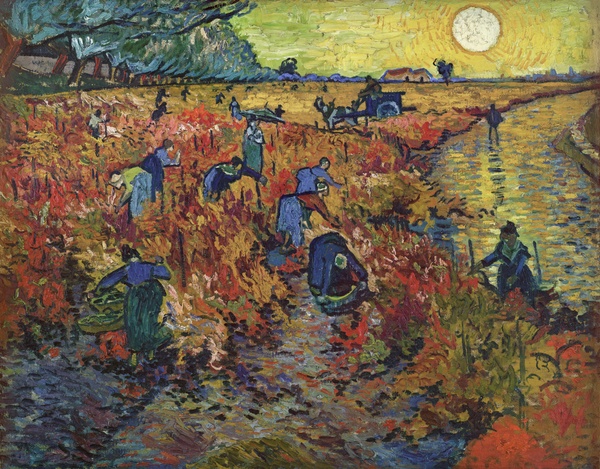
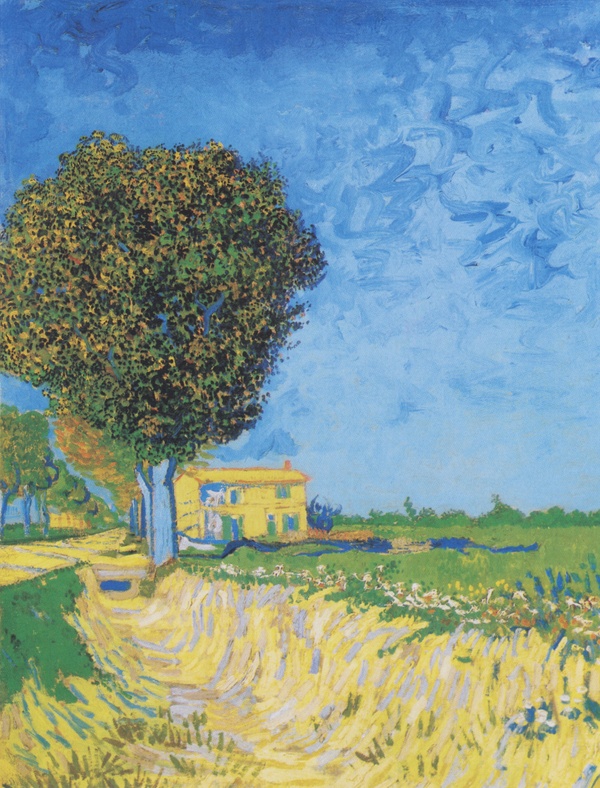
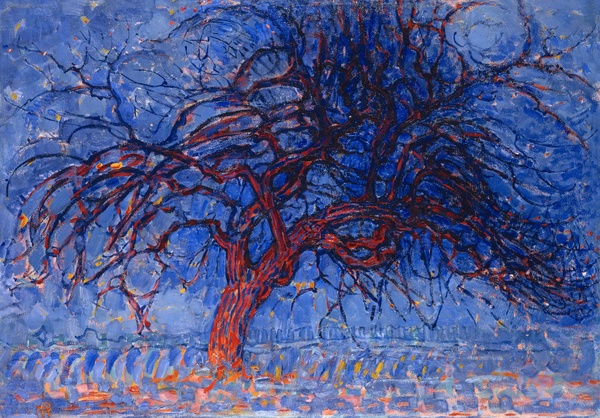
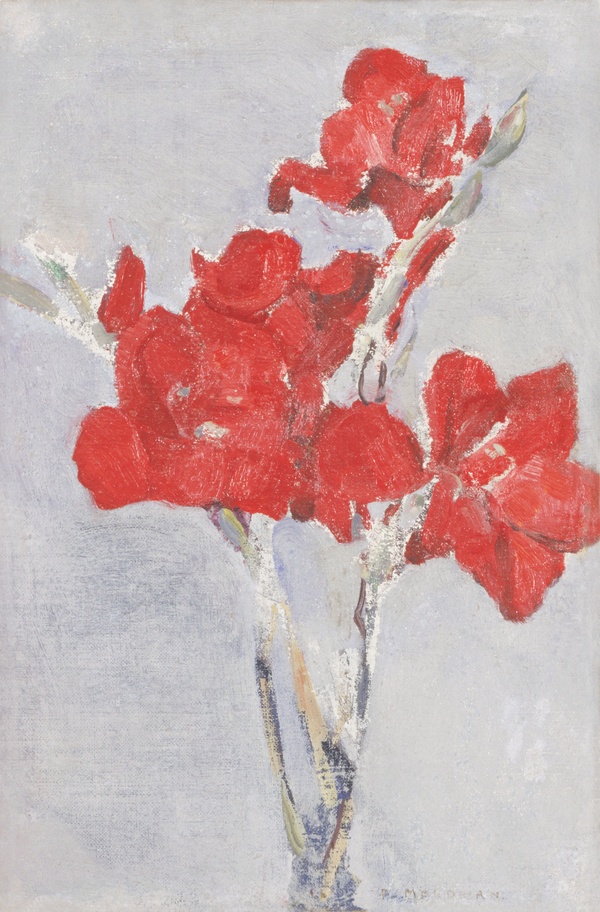
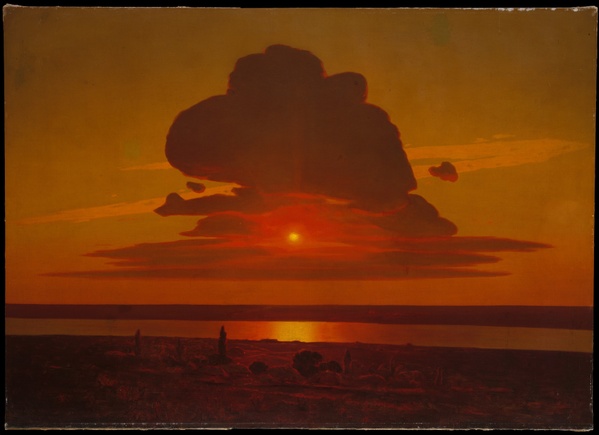
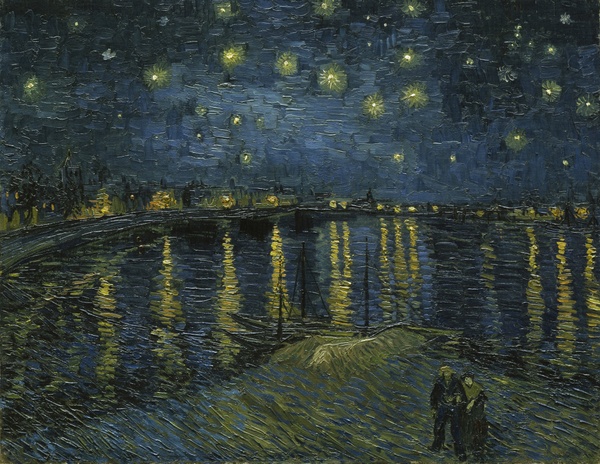
As day turns to ash, the landscape cools into vibrant hues. The Red Sunset on the Dnieper - Arkhip Kuindzhi (1905) bleeds into the celestial peace of Starry Night Over the Rhône - Vincent van Gogh (1888). We wander through the sun-baked earth of The Red Vineyard - Vincent van Gogh (1888) and the somber rows of L'Allée des Alyscamps (The Avenue of Les Alyscamps) - Vincent van Gogh (1888). The cooling spirit is captured in the skeletal branches of Avond (Evening): The Red Tree - Piet Mondrian (1908) and the organic intensity of Red Gladioli - Piet Mondrian (1906).
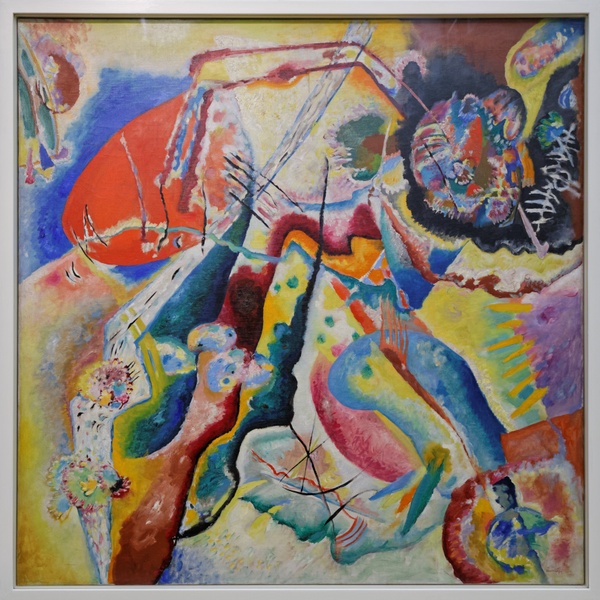
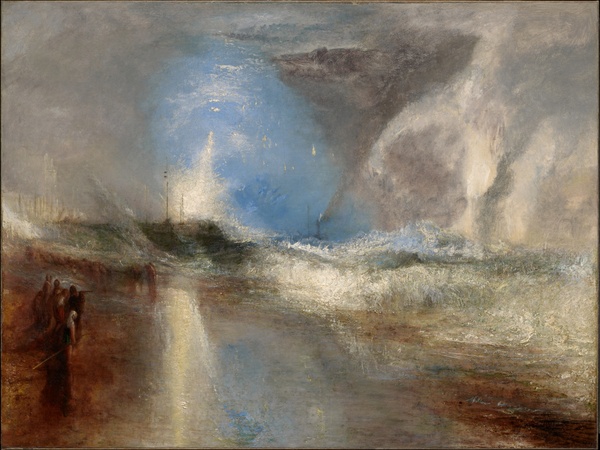
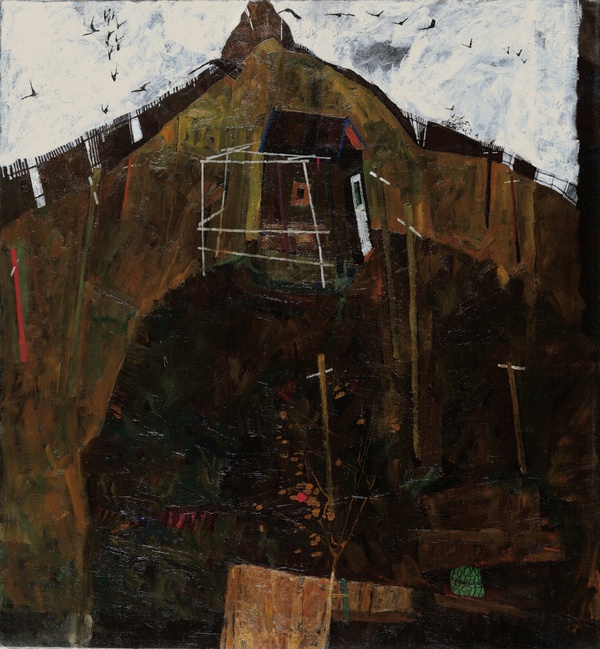
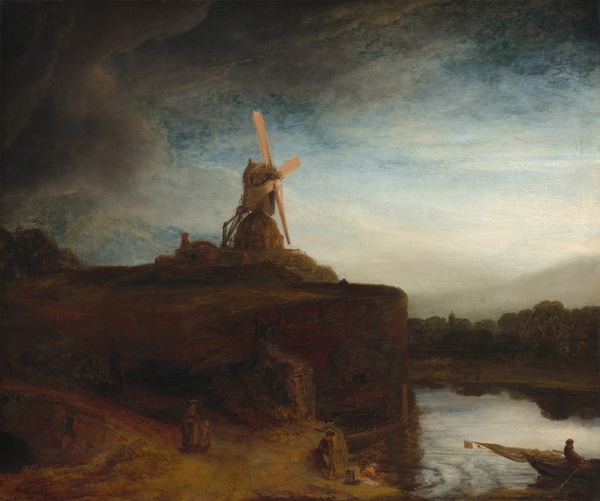
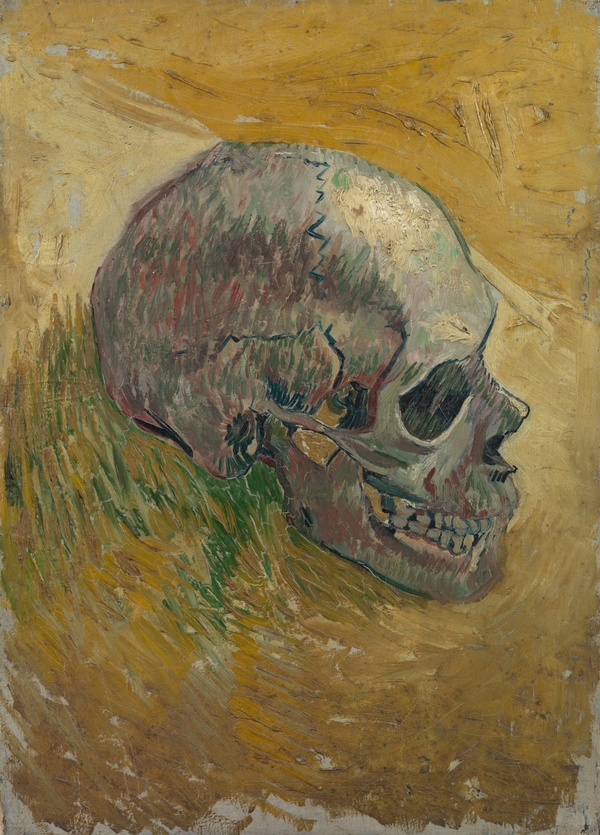
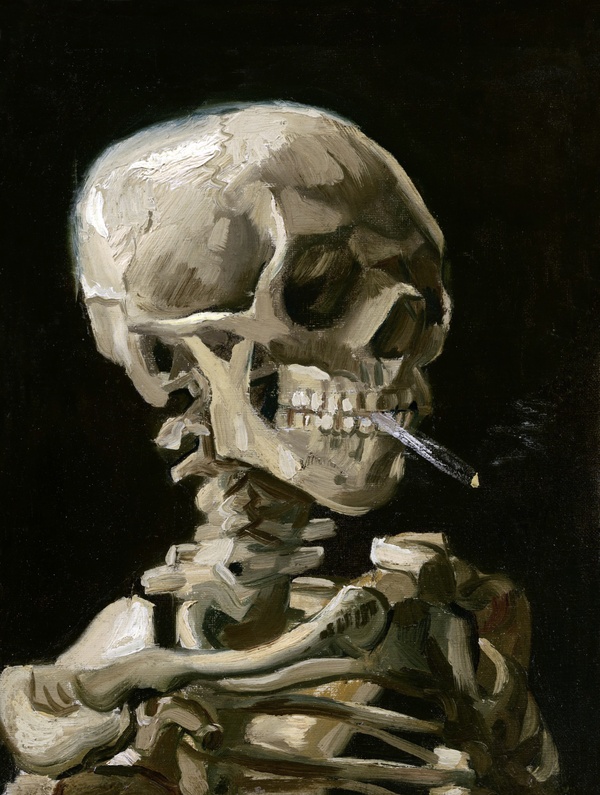
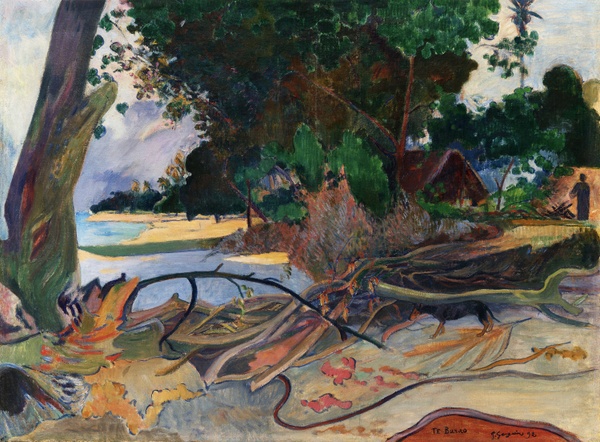
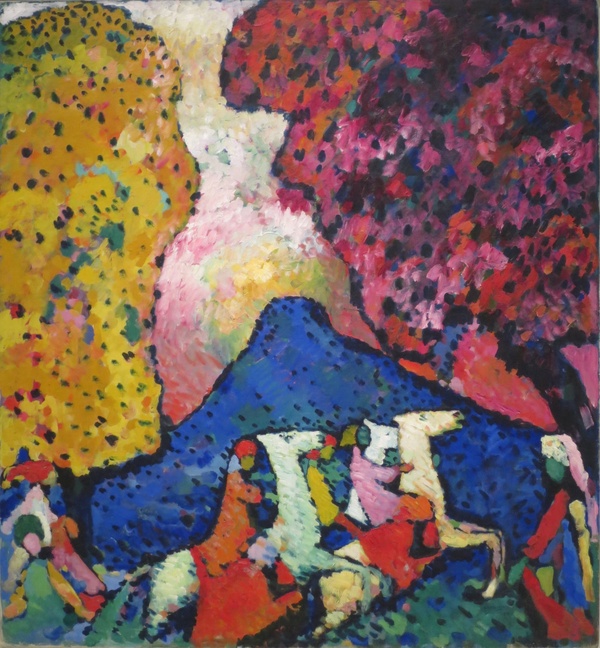
Life persists in the exotic shade of Te burao (The Hibiscus Tree) - Paul Gauguin (1892) and the rhythmic energy of Blue Mountain (Der blaue Berg) - Wassily Kandinsky (1908–09), eventually breaking into the pure abstraction of Tableau à la tache rouge (Bild mit rotem Fleck) - Wassily Kandinsky (1914). But the warnings return with Rockets and Blue Lights (Close at Hand) to Warn Steamboats of Shoal Water - J.M.W. Turner (1840) and the omen-filled Landscape with Ravens - Egon Schiele (1911). Finally, we reach the silent aftermath. By the light of The Mill - Rembrandt van Rijn (c. 1645–1648), we confront our mortality in Skull - Vincent van Gogh (1887) and the grim humor of Head of a Skeleton with a Burning Cigarette - Vincent van Gogh (1886). We end where the physical fails and the ethereal begins: The Soul Hovering Over the Body [from Marriage of Heaven and Hell, plate 14] - William Blake (1796).
Artworks in this collection

30 artworks
Europe. A Prophecy, Plate 1, Frontispiece ("The Ancient of Days") - William Blake (1794)
Premium

Europe. A Prophecy, Plate 1, Frontispiece ("The Ancient of Days") - William Blake (1794)

William Blake

United Kingdom, 1794

A powerful image of incandescent golden light emerging from a soot-black void, capturing the theme of persistent light within the darkness.

Saturn Devouring His Son - Francisco Goya (1820-1823)
Premium

Saturn Devouring His Son - Francisco Goya (1820-1823)

Francisco Goya

Spain, 1821

The dark, scorched textures and intense, brooding heat of Goya's palette evoke a sense of charred horror and transformation.

The Great Red Dragon and the Woman Clothed with the Sun - William Blake (c. 1805)
Premium

The Great Red Dragon and the Woman Clothed with the Sun - William Blake (c. 1805)

William Blake

United Kingdom, 1805

Intense volcanic reds and a sense of mythological heat provide a grand, dramatic exploration of fire and power.

Death of Sardanapalus - Eugène Delacroix (1827)
Premium

Death of Sardanapalus - Eugène Delacroix (1827)

Eugène Delacroix

France, 1827

The palette of deep reds and warm tones, combined with the scene of destruction, matches the volcanic intensity of the cinder's edge.

Tornado in an American Forest - Thomas Cole (1831)

Tornado in an American Forest - Thomas Cole (1831)

Thomas Cole

United Kingdom, 1831

The dark, heavy atmosphere and imagery of destruction evoke the smoke and chaos of fire's transformation of the land.

View of Toledo - El Greco (c. 1598-1600)
Premium

View of Toledo - El Greco (c. 1598-1600)

El Greco

Greece, 1599

El Greco's dramatic, electric sky and scorched landscape suggest the turbulent atmosphere surrounding an elemental heat.

Burning of the Houses of Parliament (October 6, 1834) - J.M.W. Turner (1834–1835)
Premium

Burning of the Houses of Parliament (October 6, 1834) - J.M.W. Turner (1834–1835)

J.M.W. Turner

United Kingdom, 1834

Turner's masterful use of orange and red captures the sheer incandescent energy and scale of a massive blaze.

Neubrandenburg on Fire - Caspar David Friedrich (c. 1834)
Premium

Neubrandenburg on Fire - Caspar David Friedrich (c. 1834)

Caspar David Friedrich

Germany, 1834

The ultimate image of the theme: a city in flames with dark smoke and the deep red glow of fire reflected in the night.

Burning House - Maria Uhden (1918)

Burning House - Maria Uhden (1918)

Maria Uhden

Germany, 1918

This expressionistic depiction of a burning house provides the raw, heated energy central to the fire theme.

Woman Sitting by the Fireside - Édouard Vuillard (ca. 1894)
Premium

Woman Sitting by the Fireside - Édouard Vuillard (ca. 1894)

Édouard Vuillard

France, 1894

Captures the intimacy of the hearth and the quiet reflection found in the lingering warmth of a fire.

The Hearth (L'Âtre) - Édouard Vuillard (1899)
Premium

The Hearth (L'Âtre) - Édouard Vuillard (1899)

Édouard Vuillard

France, 1899

A direct representation of the hearth, capturing the domestic warmth and textural beauty of fire within the home.

The Hearth (L'Atre) - Édouard Vuillard (1899)

The Hearth (L'Atre) - Édouard Vuillard (1899)

Édouard Vuillard

France, 1899

Focuses on the quiet, lingering warmth of the hearth, emphasizing the cooling amber glow of a domestic fire.

Le café de nuit (The Night Café) - Vincent van Gogh (1888)

Le café de nuit (The Night Café) - Vincent van Gogh (1888)

Vincent van Gogh

Netherlands, 1888

The oppressive red and yellow tones create an interior that feels as though it is smoldering with intense, claustrophobic heat.

Belshazzar's Feast - Rembrandt van Rijn (1636)

Belshazzar's Feast - Rembrandt van Rijn (1636)

Rembrandt van Rijn

Netherlands, 1636

The supernatural, incandescent light breaking through the darkness mirrors the sudden flare of an ember in the ash.

The Conspiracy of the Batavians under Claudius Civilis - Rembrandt van Rijn (1661-1662)
Premium

The Conspiracy of the Batavians under Claudius Civilis - Rembrandt van Rijn (1661-1662)

Rembrandt van Rijn

Netherlands, 1661

Rembrandt's use of chiaroscuro creates a smoldering effect, where light seems to burn from within a deep, soot-black void.

Red Sunset on the Dnieper - Arkhip Kuindzhi (1905)
Premium

Red Sunset on the Dnieper - Arkhip Kuindzhi (1905)

Arkhip Kuindzhi

Ukraine, 1905

The sunset is rendered as an incandescent, volcanic red band cutting through the dark, mirroring a cooling horizon of embers.

Starry Night Over the Rhône - Vincent van Gogh (1888)

Starry Night Over the Rhône - Vincent van Gogh (1888)

Vincent van Gogh

Netherlands, 1888

The amber lights reflecting in the dark water mimic the flickering of cooling embers and rising sparks against a night sky.

The Red Vineyard - Vincent van Gogh (1888)

The Red Vineyard - Vincent van Gogh (1888)

Vincent van Gogh

Netherlands, 1888

The intense volcanic reds and golden ambers of the vineyard evoke a sea of cooling, smoldering heat.

L'Allée des Alyscamps (The Avenue of Les Alyscamps) - Vincent van Gogh (1888)
Premium

L'Allée des Alyscamps (The Avenue of Les Alyscamps) - Vincent van Gogh (1888)

Vincent van Gogh

Netherlands, 1888

The ground and trees are rendered in a palette of cooling embers, amber, and orange, suggesting a path transformed by heat.

Avond (Evening): The Red Tree - Piet Mondrian (1908)
Premium

Avond (Evening): The Red Tree - Piet Mondrian (1908)

Piet Mondrian

Netherlands, 1908

The skeletal tree in vibrant red feels like a charred remain still glowing with an internal, volcanic heat.

Red Gladioli - Piet Mondrian (1906)

Red Gladioli - Piet Mondrian (1906)

Piet Mondrian

Netherlands, 1906

The sharp, flickering reds of the gladioli against a dark background resemble small tongues of flame or cooling cinders.

Te burao (The Hibiscus Tree) - Paul Gauguin (1892)
Premium

Te burao (The Hibiscus Tree) - Paul Gauguin (1892)

Paul Gauguin

France, 1892

The deep ambers and warm, earthy reds in this landscape suggest a quiet, persistent heat under a tropical sun.

Tableau à la tache rouge (Bild mit rotem Fleck) - Wassily Kandinsky (1914)
Premium

Tableau à la tache rouge (Bild mit rotem Fleck) - Wassily Kandinsky (1914)

Wassily Kandinsky

Russia, 1914

An abstract explosion of volcanic red amidst dark, soot-like forms, perfectly capturing the energy of a red spot in the cinder.

Rockets and Blue Lights (Close at Hand) to Warn Steamboats of Shoal Water - J.M.W. Turner (1840)
Premium

Rockets and Blue Lights (Close at Hand) to Warn Steamboats of Shoal Water - J.M.W. Turner (1840)

J.M.W. Turner

United Kingdom, 1840

Sparks and flares cutting through a thick, soot-heavy atmosphere perfectly capture the visual dance of rising sparks.

Landscape with Ravens - Egon Schiele (1911)

Landscape with Ravens - Egon Schiele (1911)

Egon Schiele

Austria, 1911

The jagged, soot-black forms and ravens create a charred, melancholic landscape that feels like a world reduced to ash.

The Mill - Rembrandt van Rijn (c. 1645–1648)
Premium

The Mill - Rembrandt van Rijn (c. 1645–1648)

Rembrandt van Rijn

Netherlands, 1645

The deep shadows and persistent, atmospheric glow at the edge of the sky evoke the silence and lingering light of fire's end.

Skull - Vincent van Gogh (1887)
Premium

Skull - Vincent van Gogh (1887)

Vincent van Gogh

Netherlands, 1887

The skull's monochromatic tones and texture evoke the ash and transformation found at the center of fire's aftermath.

Head of a Skeleton with a Burning Cigarette - Vincent van Gogh (1886)

Head of a Skeleton with a Burning Cigarette - Vincent van Gogh (1886)

Vincent van Gogh

Netherlands, 1886

The single point of heat from the cigarette serves as a literal ember, highlighting the persistence of light in a skeletal, ashen scene.

The Soul Hovering Over the Body [from Marriage of Heaven and Hell, plate 14] - William Blake (1796)
Premium

The Soul Hovering Over the Body [from Marriage of Heaven and Hell, plate 14] - William Blake (1796)

William Blake

England, 1796

An ethereal light rising above the dark earth, representing the persistence of the spirit/light in the wake of transformation.

Blue Mountain (Der blaue Berg) - Wassily Kandinsky (1908–09)
Premium

Blue Mountain (Der blaue Berg) - Wassily Kandinsky (1908–09)

Wassily Kandinsky

Russia, 1909

A glowing, incandescent landscape that feels like a dream of fire, with warm colors suggesting a smoldering ground.

Discover more curated collections

View all collections