In the realm where consciousness meets the infinite expanse of water, artists have long sought to capture not merely the sea's physical presence, but its profound psychological resonance within the human soul. "Dreams of the Sea" reveals how painters across centuries have transformed maritime scenes into windows of the imagination, where reality dissolves into reverie and the horizon becomes a threshold between the known and unknowable.
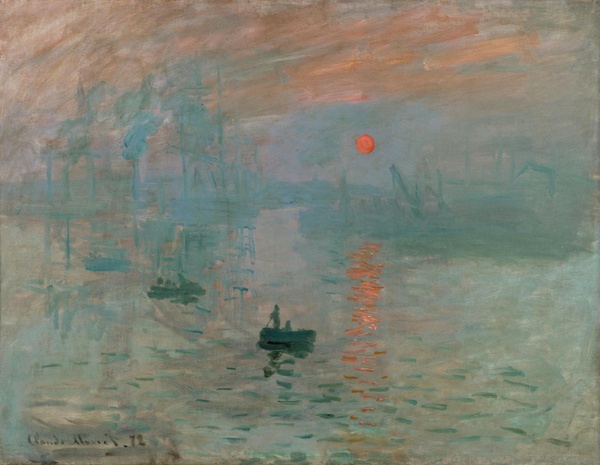
Claude Monet's revolutionary "Impression, Sunrise" emerges as the genesis of this artistic odyssey, where the sun's reflection fractures across Le Havre's harbor like scattered thoughts upon waking. The painting's ephemeral quality captures that liminal moment when dreams surrender to dawn, establishing the sea as both mirror and vessel for the subconscious mind. This luminous vision spawned an entire movement dedicated to capturing fleeting impressions rather than fixed realities.
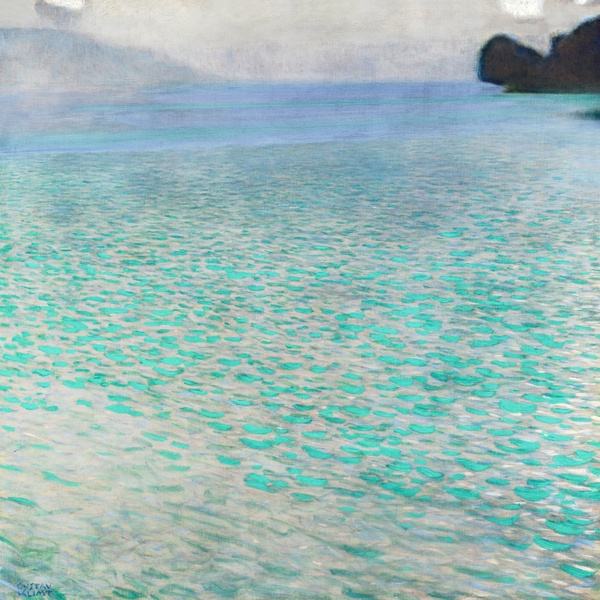
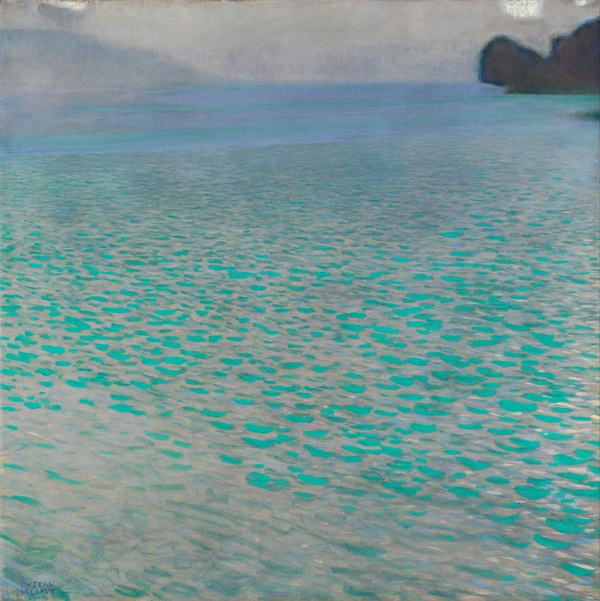
As we journey deeper into these aquatic reveries, Gustav Klimt's "On Lake Attersee" presents water as pure abstraction—turquoise depths that seem to pulse with hidden currents of thought. The Austrian master strips away narrative, leaving only the hypnotic rhythm of waves that mirror the mind's own mysterious undulations. Here, the boundary between observer and observed dissolves entirely.
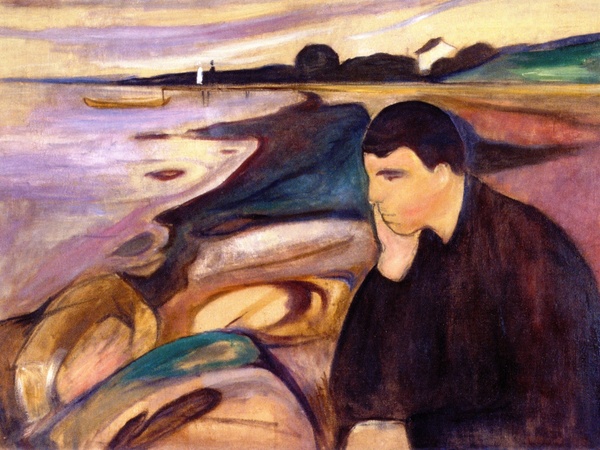
The sea's capacity for melancholy finds profound expression in Edvard Munch's "Melancholy," where a brooding figure contemplates the water's edge at Åsgårdstrand. The Norwegian master understood that the sea amplifies our innermost emotional states, transforming the shoreline into a theater of psychological drama. The distant couple on the jetty haunts the composition like figures from a half-remembered dream.
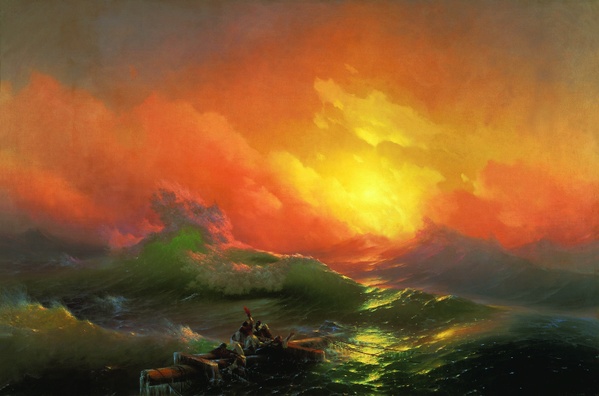
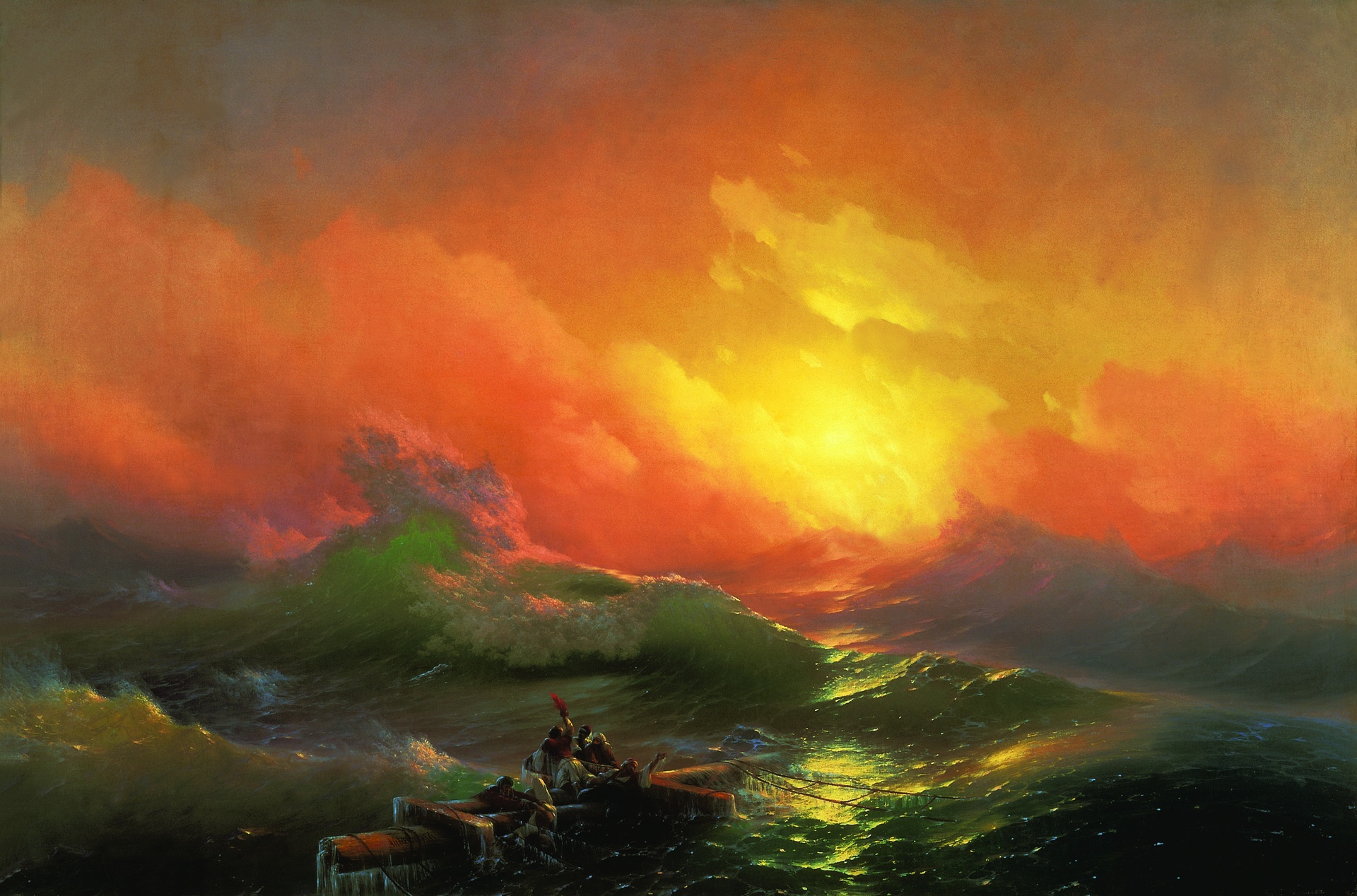
Yet these aquatic dreams are not always peaceful. J.M.W. Turner's "The Ninth Wave" plunges us into maritime nightmare, where Ivan Aivazovsky's shipwrecked sailors cling desperately to their cross-shaped mast as nature's fury incarnate bears down upon them. This Russian master's luminous wave embodies the sea's dual nature—both destroyer and revealer of human courage in extremity.
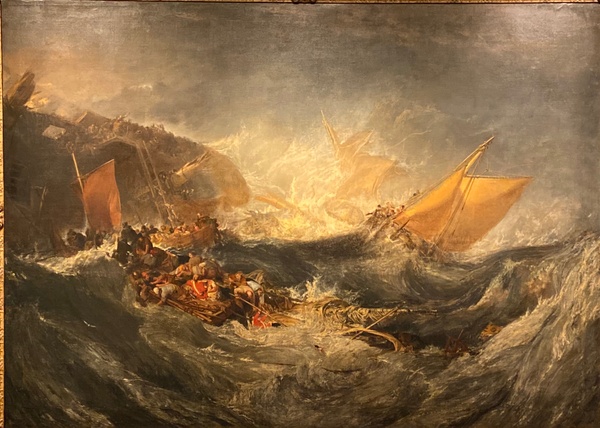
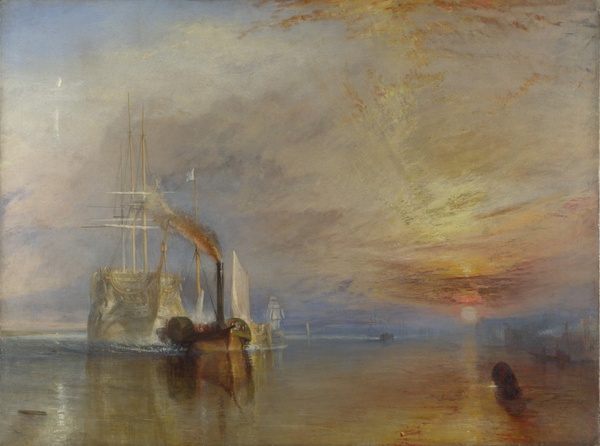
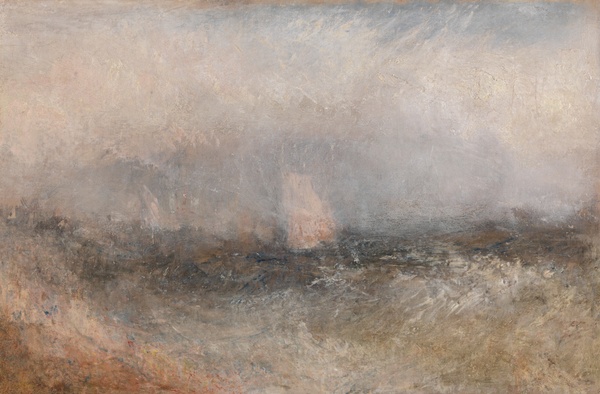
Turner himself appears throughout this exhibition like a recurring dream figure, his visionary canvases mapping the sea's emotional geography. "The Fighting Temeraire tugged to her last Berth" transforms a naval vessel's final voyage into an elegy for passing time, while "The Wreck of a Transport Ship" captures the sublime terror that lurks beneath every maritime venture. In "Off the Nore," Turner reduces the Thames Estuary to pure atmospheric energy, where water and sky merge in prophetic abstraction.
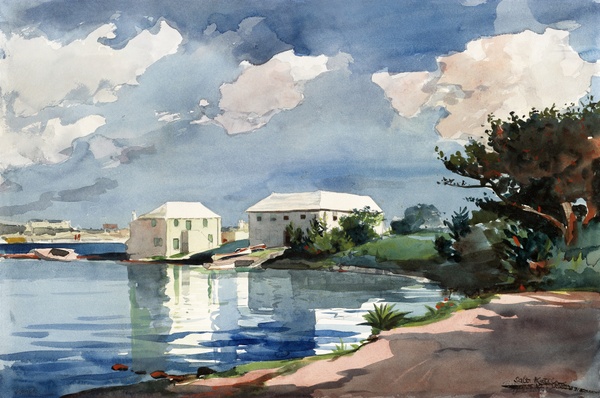
The exhibition's more intimate moments reveal how the sea infiltrates daily consciousness. Winslow Homer's "Casting, Number Two" presents solitude as a form of communion with water, the fishing line's arc connecting human aspiration to aquatic mystery. His "Salt Kettle, Bermuda" bathes Caribbean waters in crystalline light that seems to emanate from within the medium itself.
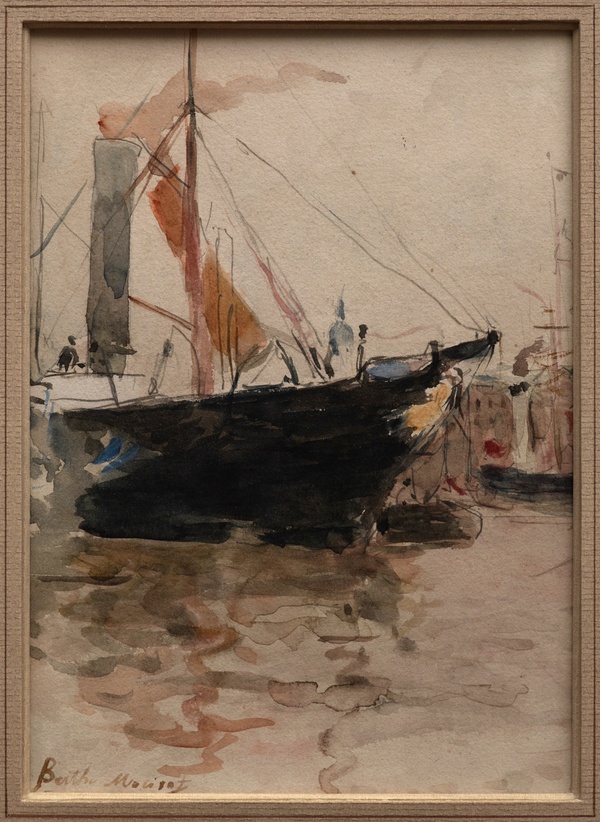
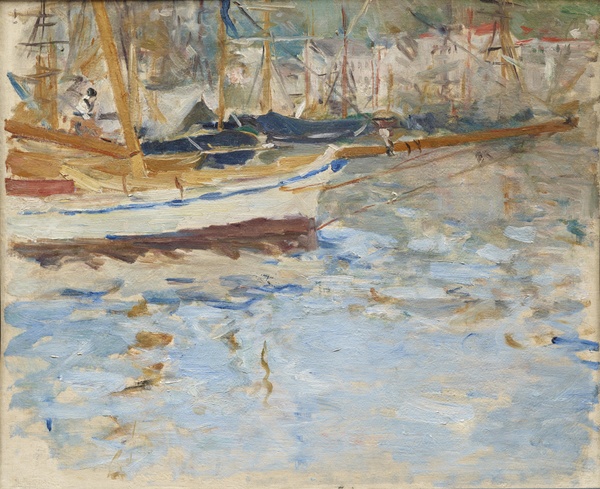
Berthe Morisot's Impressionist harbors—both at the "Isle of Wight" and "Nice"—capture the sea's social dimension, where vessels gather like thoughts in a dreaming mind. Her loose brushwork suggests memories forming and dissolving, the way seaside experiences linger in consciousness long after the journey ends.
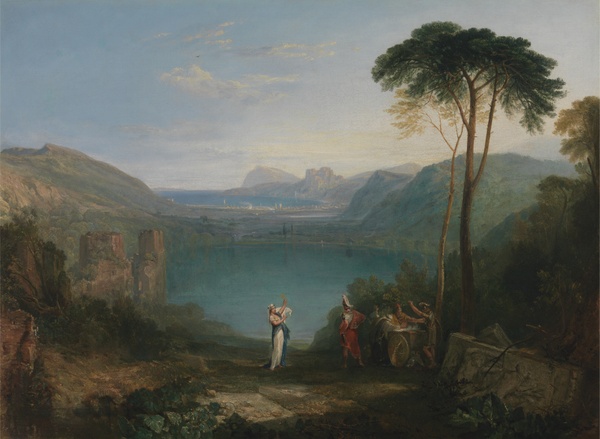
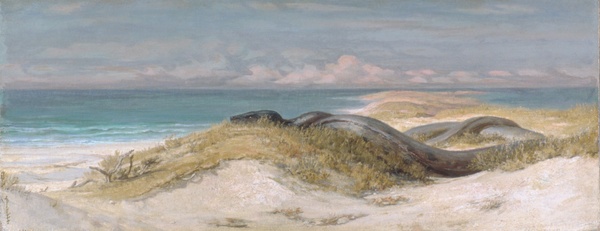
The mythological dimension of oceanic dreams manifests powerfully in Turner's "Lake Avernus: Aeneas and the Cumaean Sibyl," where classical narrative merges with atmospheric mysticism, and Elihu Vedder's haunting "Lair of the Sea Serpent," where primordial fears coil into sandy reality. These works remind us that the sea has always been humanity's greatest repository of untamed imagination.
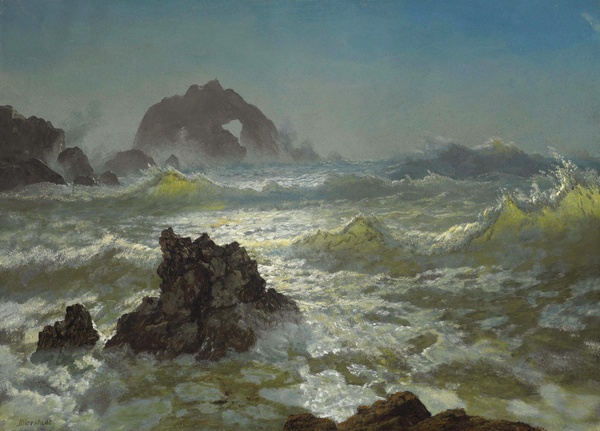
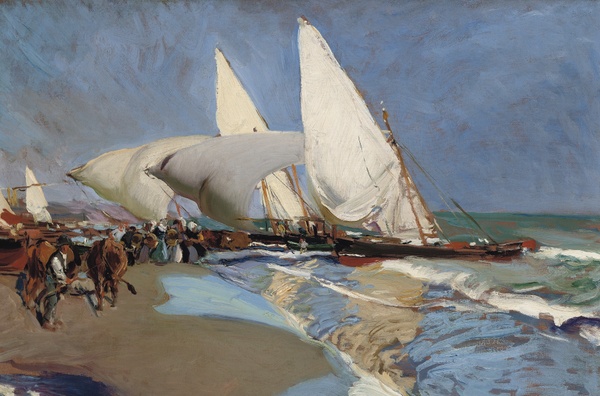
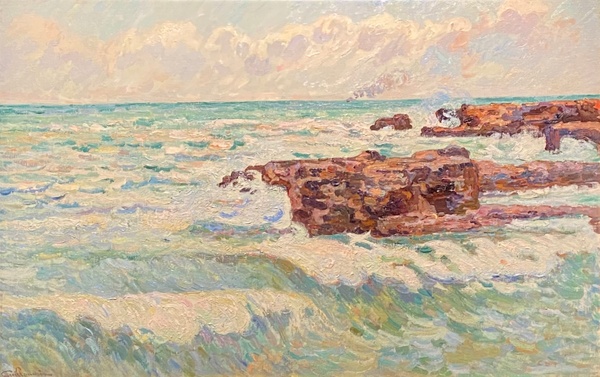
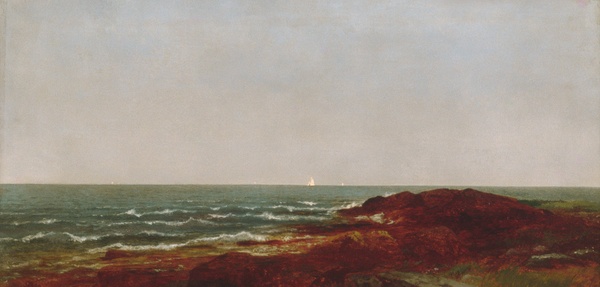
From Albert Bierstadt's dramatic "Seal Rock, California" to Joaquín Sorolla's sun-drenched "Beach at Valencia," from Armand Guillaumin's bold "Sea at Saint-Palais" to John Frederick Kensett's contemplative "The Sea," these works collectively reveal how water serves as both canvas and muse for the dreaming mind. Each artist discovered in the sea's endless horizon a reflection of consciousness itself—fluid, mysterious, and eternally in motion.
Ultimately, these maritime dreams speak to our deepest longing for transcendence, where the boundary between self and cosmos dissolves in the rhythm of eternal tides.