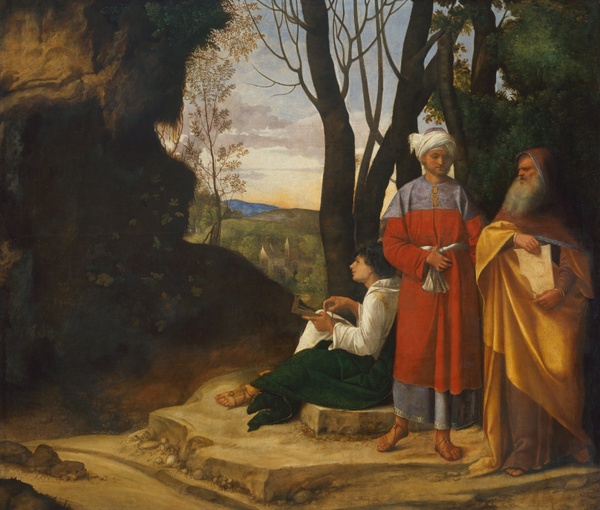
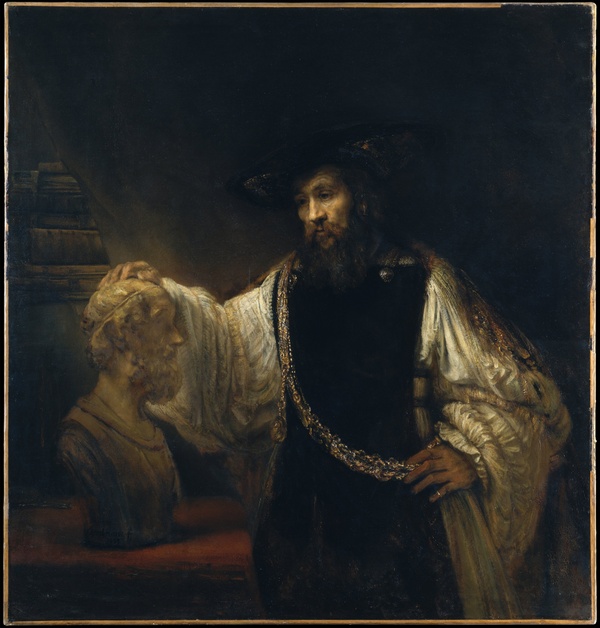
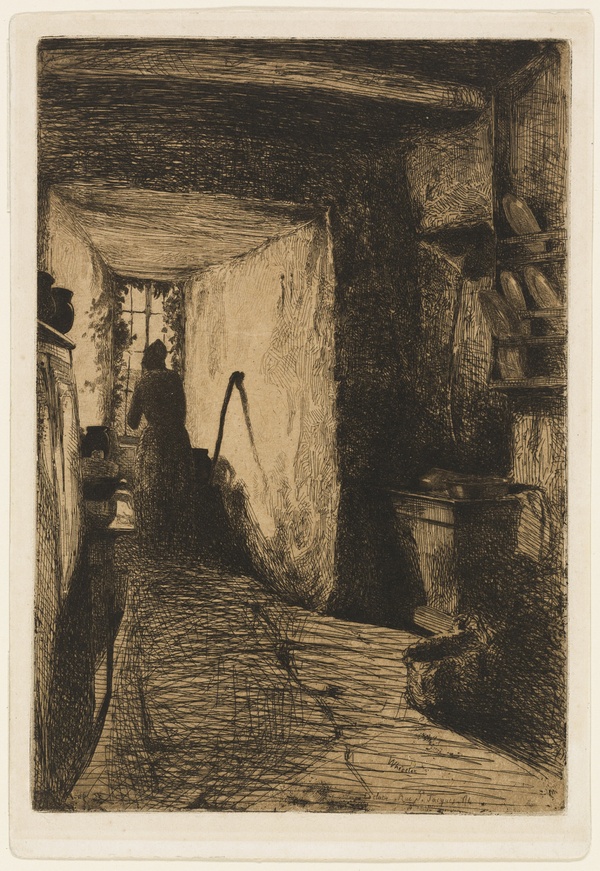
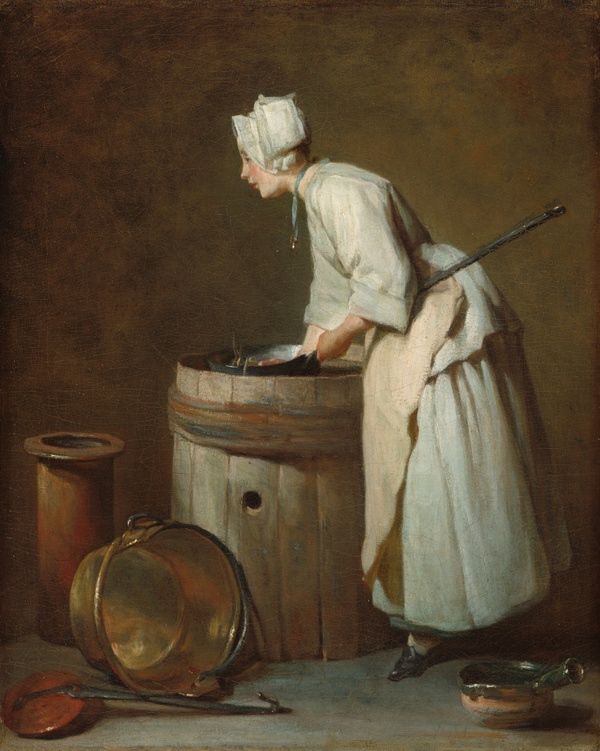
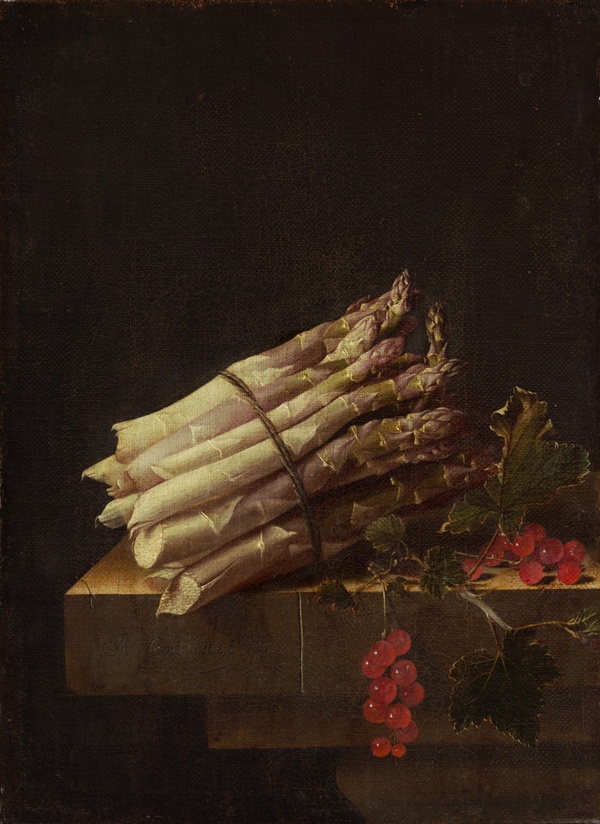
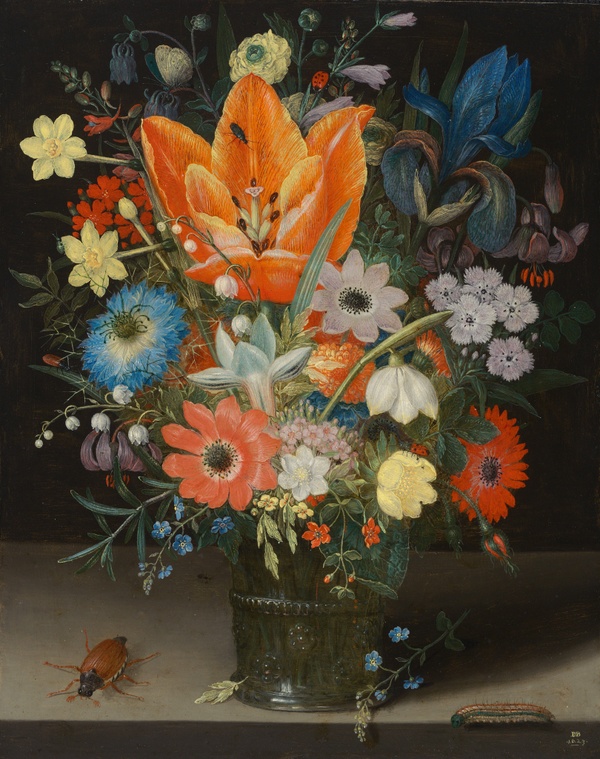
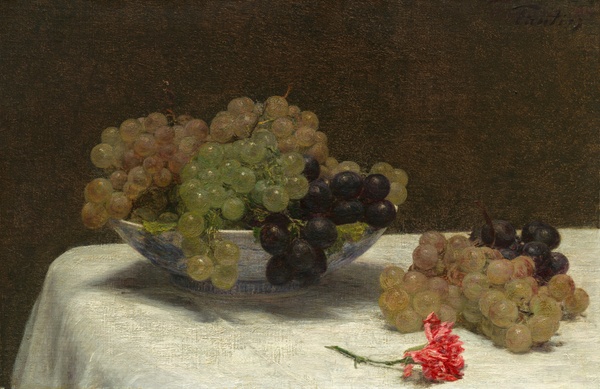
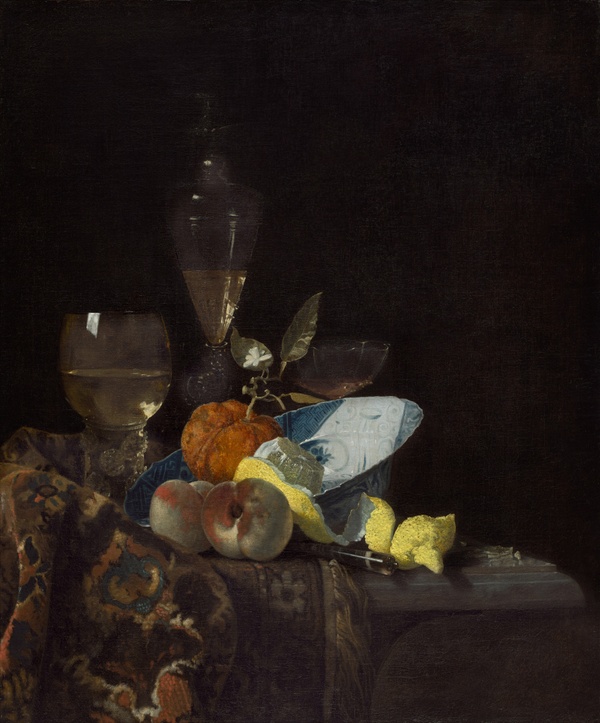
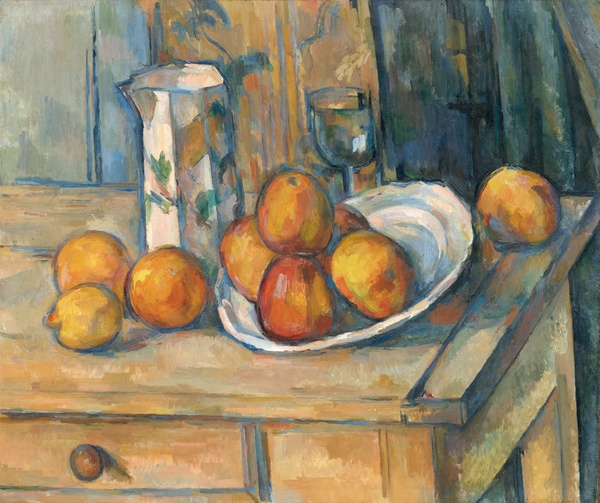
In the dim, sun-streaked corridors of the soul’s inquiry, we begin our journey with the ancestral wisdom of The Three Philosophers - Giorgione (1508/1509) and the heavy, contemplative weight of Aristotle with a Bust of Homer - Rembrandt van Rijn (1653). Every seeker requires a vessel, and here The Kitchen - James McNeill Whistler (1858) becomes the crucible of the everyday, where The Scullery Maid - Jean Siméon Chardin (1738) prepares the elemental foundations. The laboratory is stocked with the ingredients of the earth: the pale stalks of Still Life with Asparagus and Red Currants - Adriaen Coorte (1696), the radiant petals of Still Life with Iris - Peter Binoit (1623), and the succulent clusters found in Still Life with Grapes and a Carnation - Henri Fantin-Latour (c. 1880). These materials, along with the luxury of Still Life - Willem Kalf (c. 1660) and the structured forms of Still Life with Milk Jug and Fruit - Paul Cézanne (c. 1900), await transmutation.
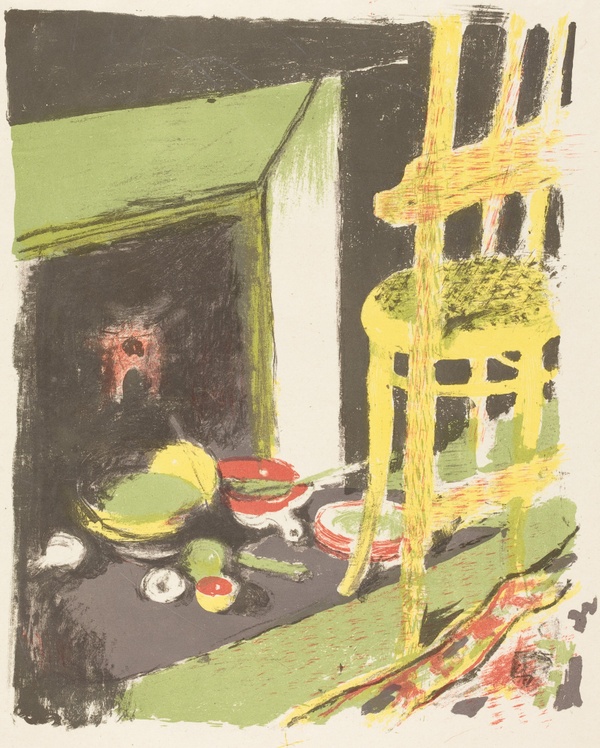
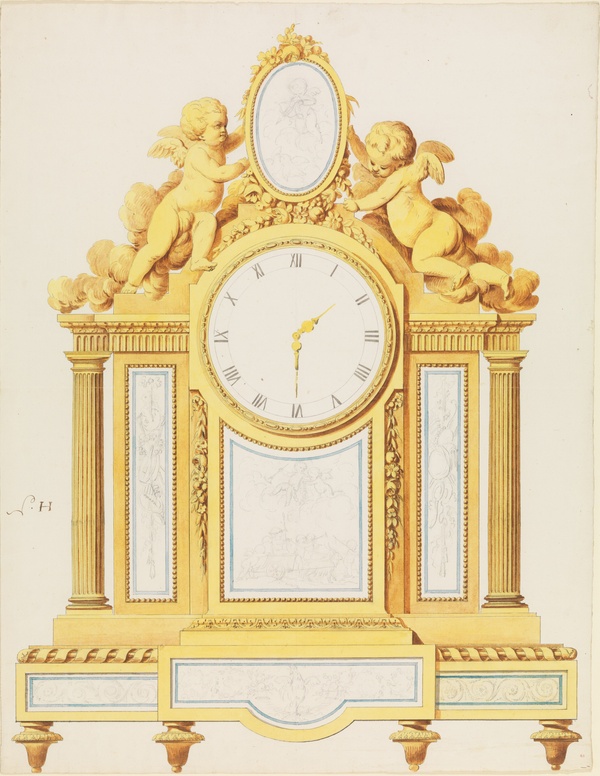
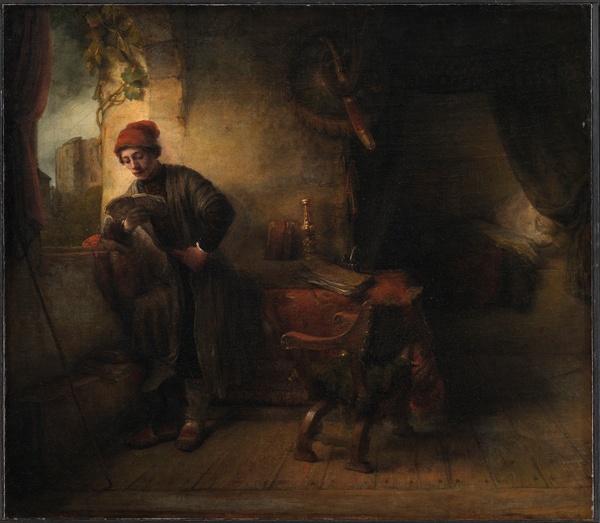
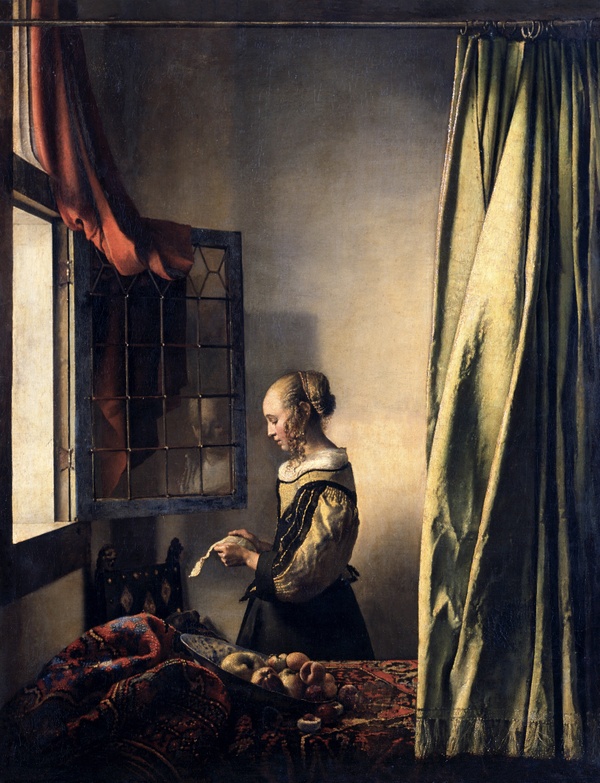
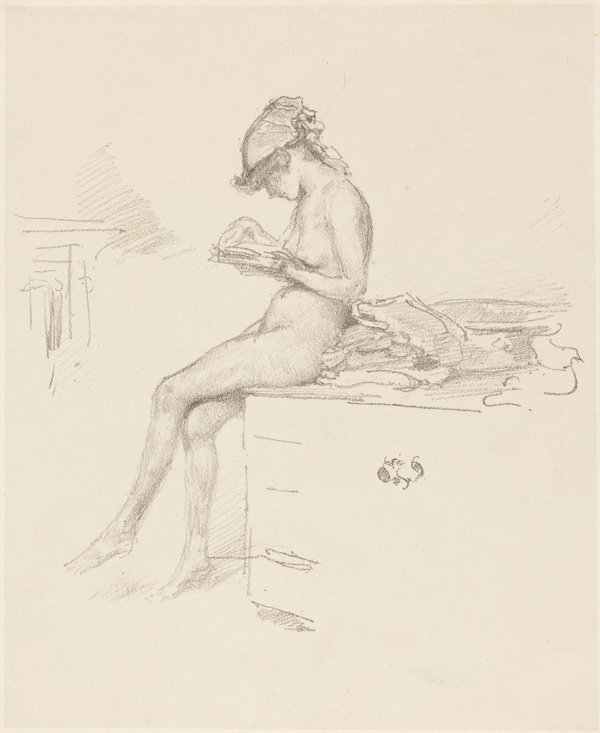
The fires are stoked at The Hearth (L'Âtre) - Édouard Vuillard (1899), while the meticulous Design for a Clock - Anonymous, French (ca. 1781–1785) measures the slow drip of eternity. Knowledge is a patient accumulation, seen in the Standing Young Man at the Window in his Study Reading ("The Student") - Willem Drost (c. 1653) and the quiet intensity of the Girl Reading a Letter at an Open Window - Johannes Vermeer (c. 1657–1659). Even in the most vulnerable moments, such as The Little Nude Model, Reading - James McNeill Whistler (1889/1890), the search for truth remains paramount.
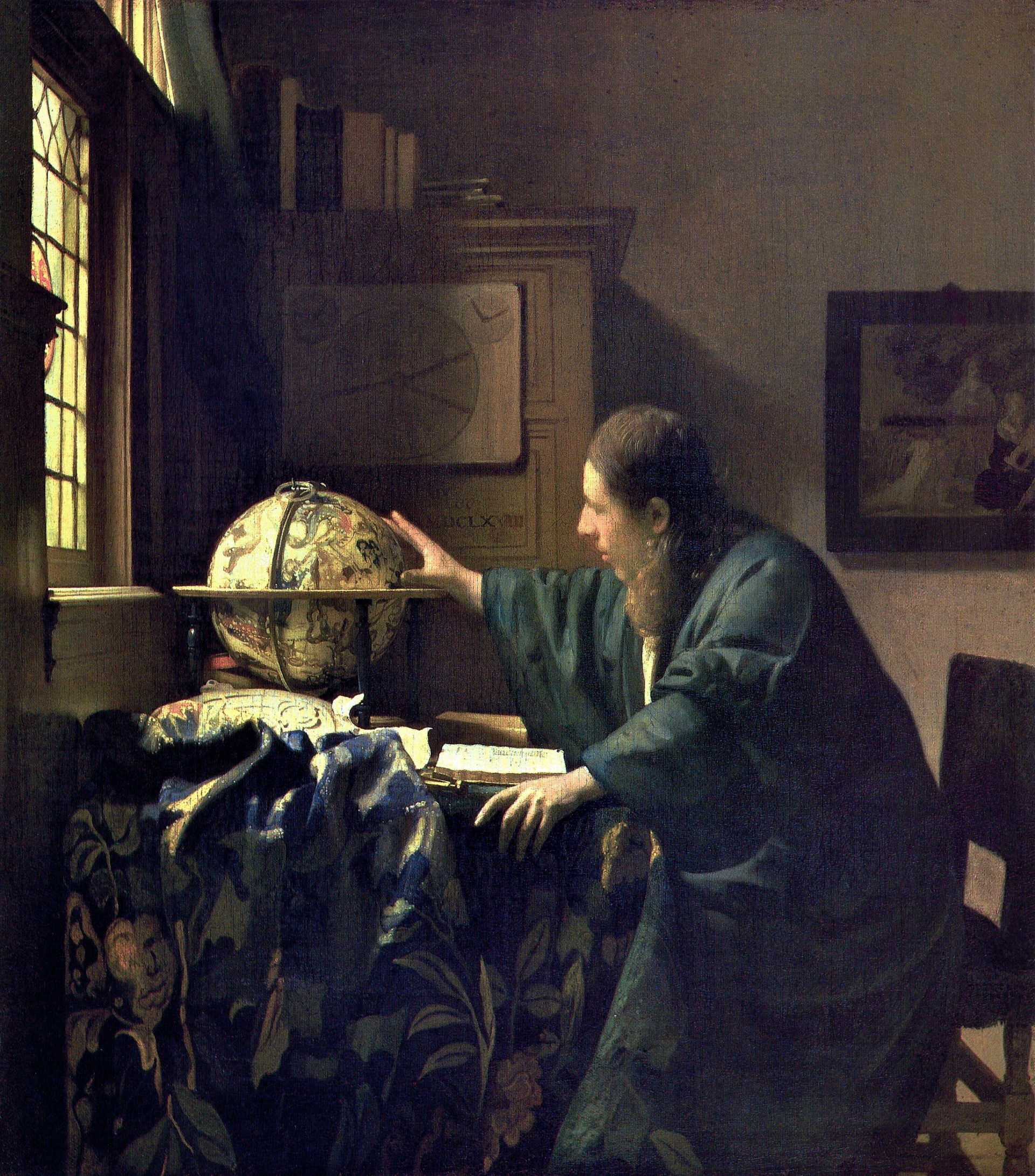
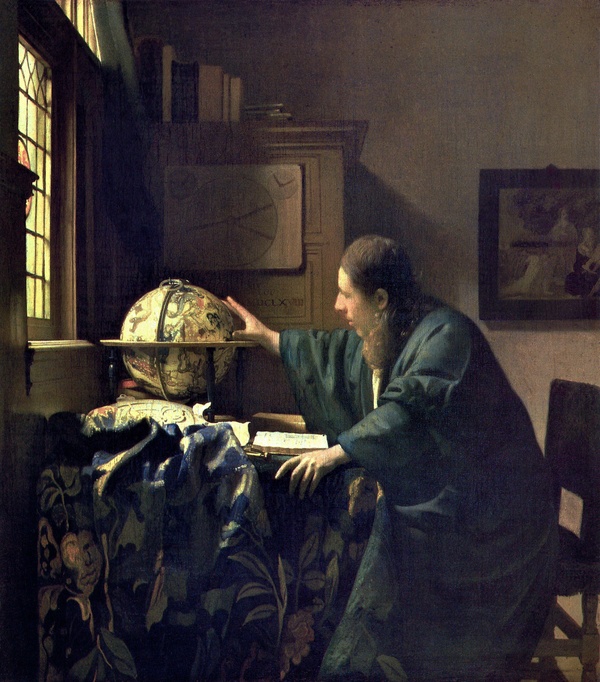
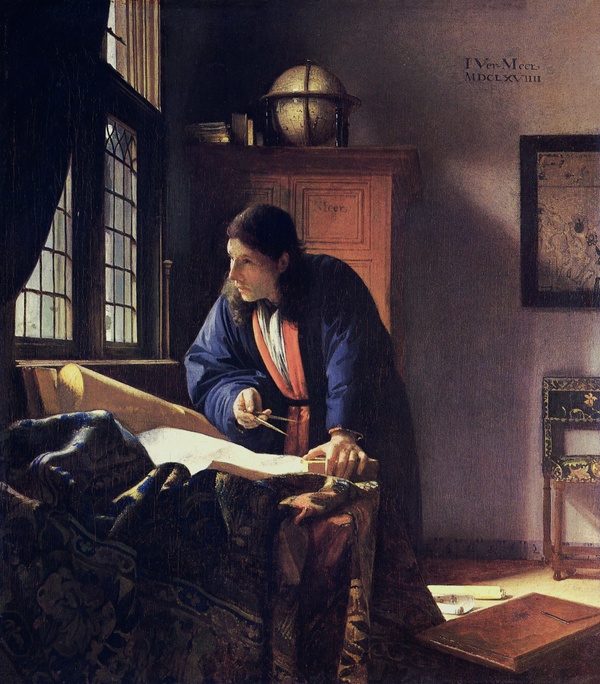
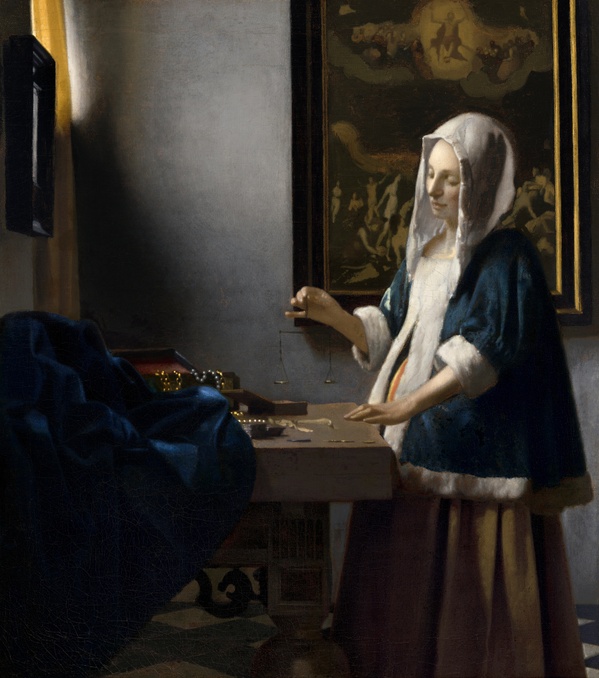
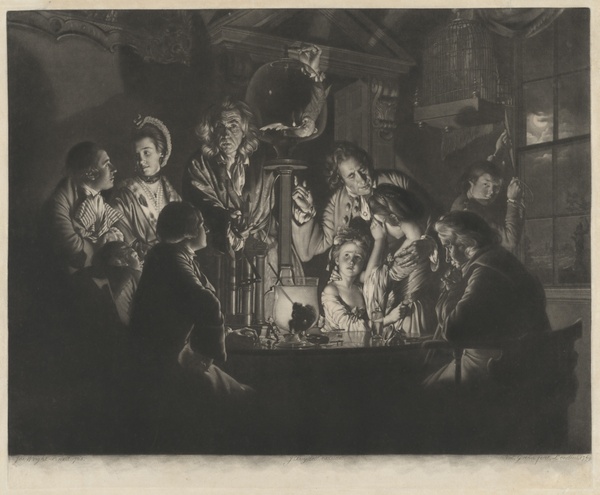
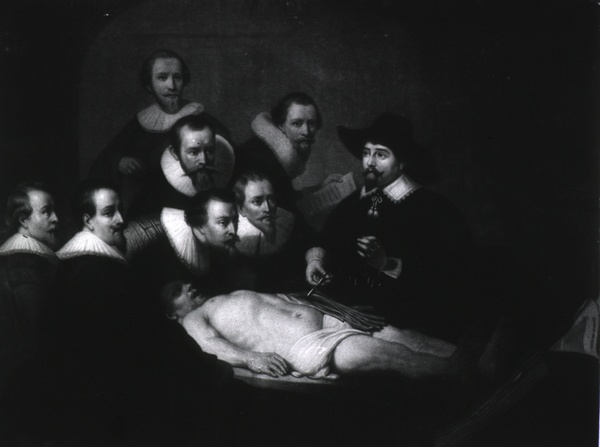
The workshop expands into the heavens as The Astronomer - Johannes Vermeer (1668) reaches for the stars, mirrored by the terrestrial precision of The Geographer - Johannes Vermeer (1669). In this space, the Woman Holding a Balance - Johannes Vermeer (ca. 1664) seeks to weigh the soul itself. However, Enlightenment brings cold reality; A Philosopher Shewing an Experiment on the Air Pump - Valentine Green after Joseph Wright (1769) and the visceral The Anatomy Lesson of Dr. Nicolaes Tulp - Rembrandt van Rijn (1632) remind us of the fragile machinery of life.
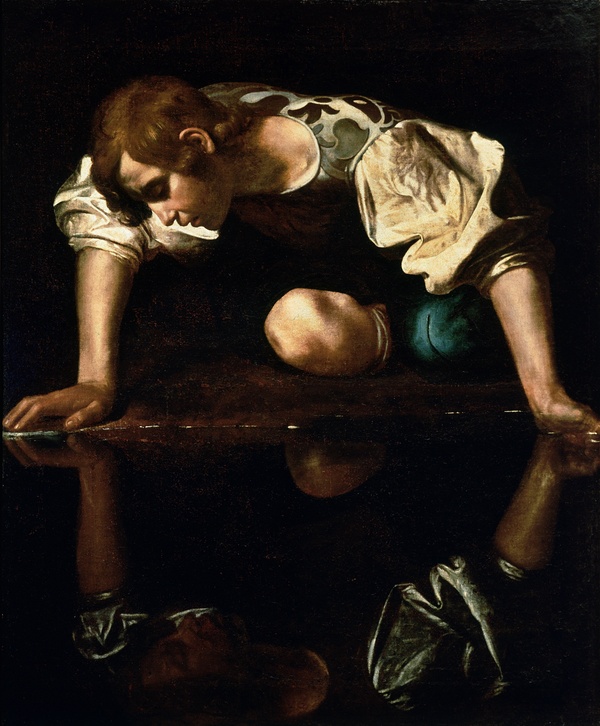
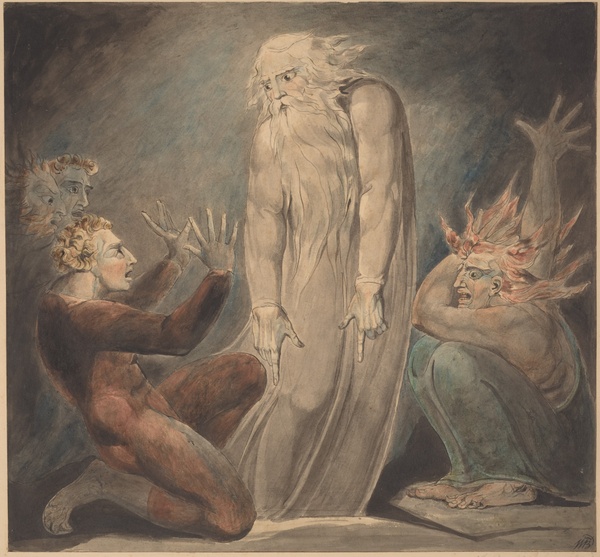
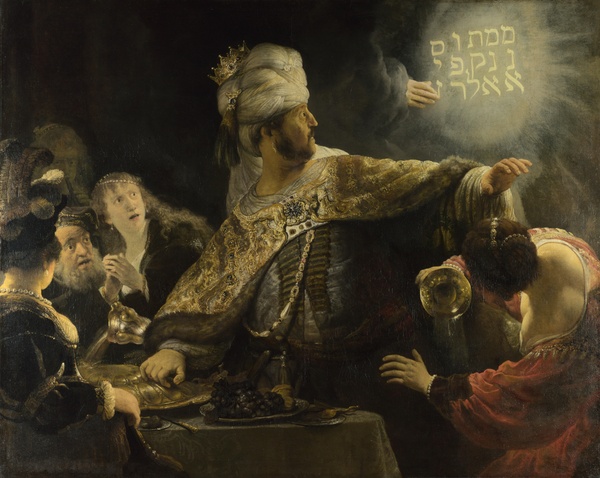
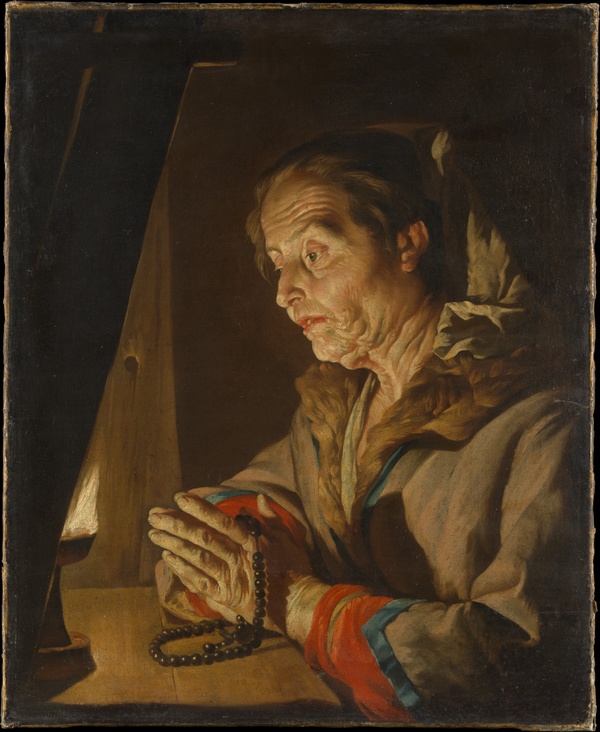
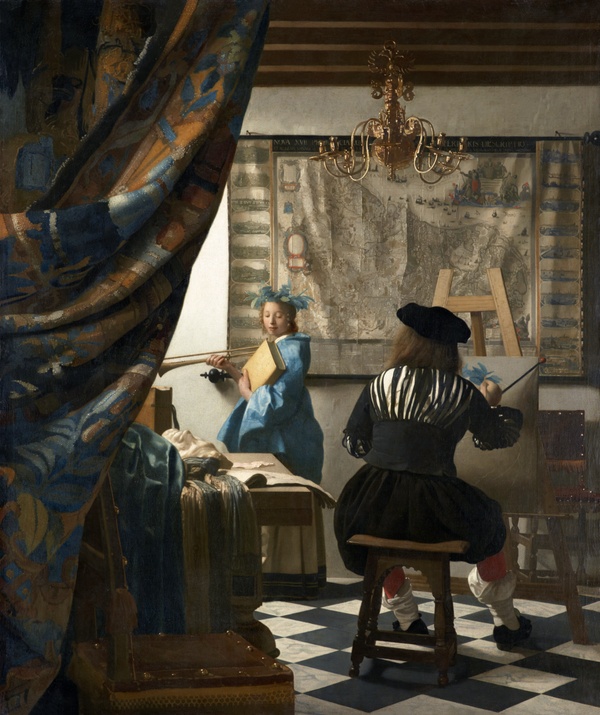
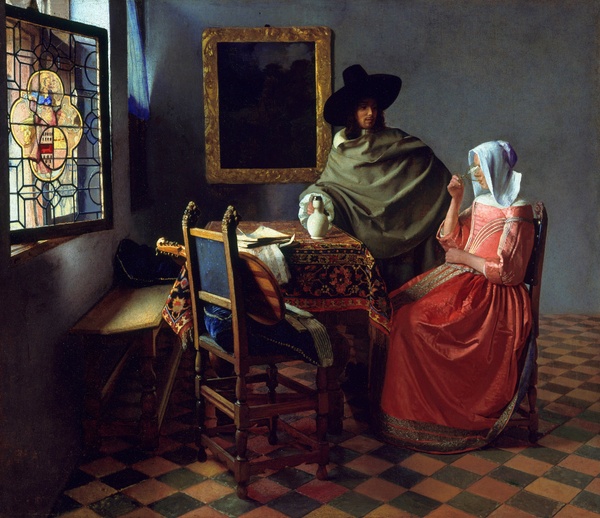
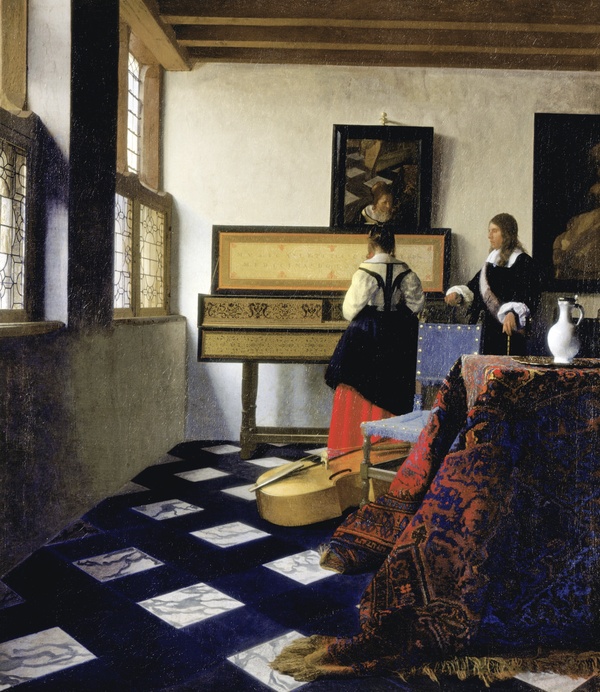
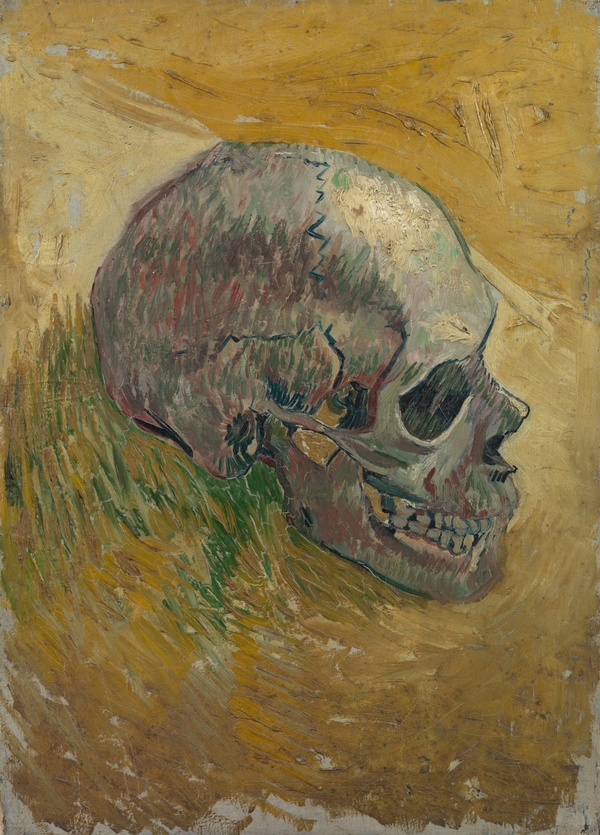
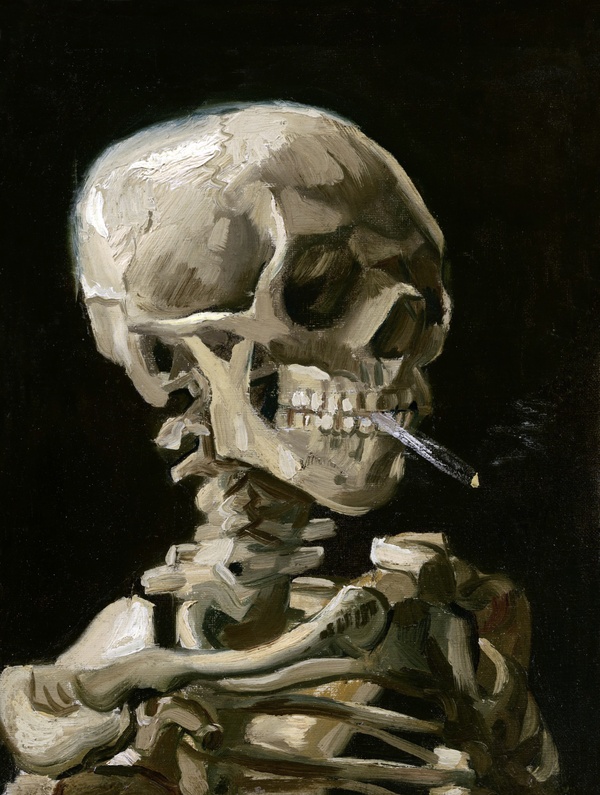
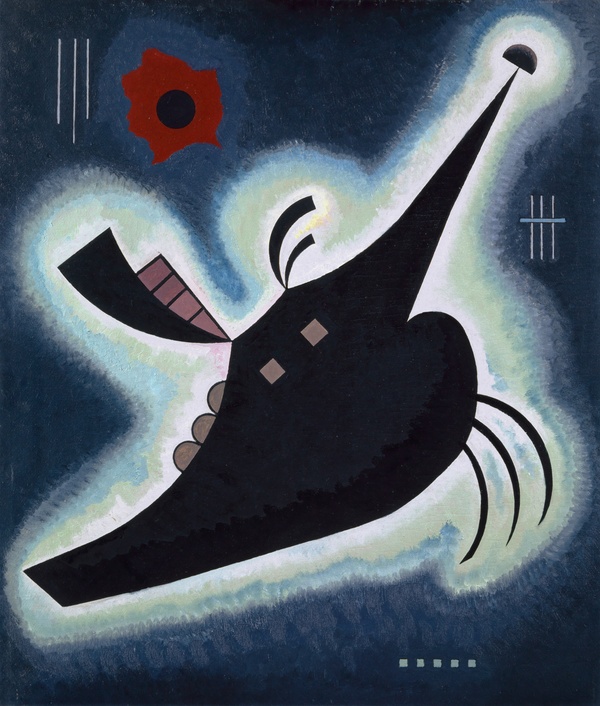
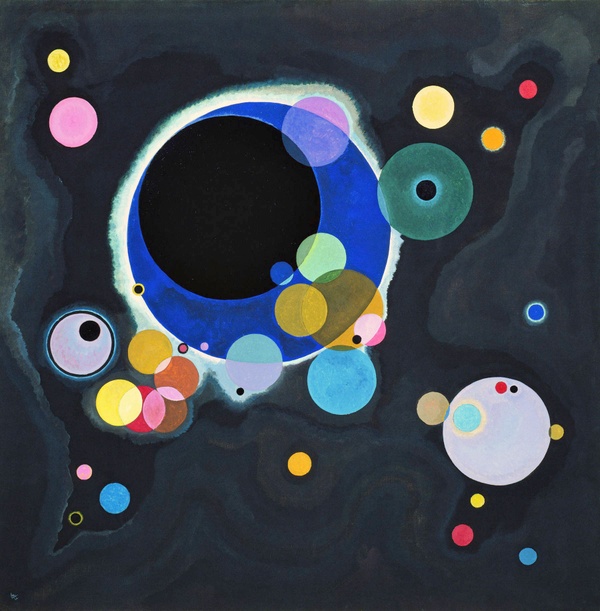
Inner reflection can be a trap, as seen in Narcissus - Caravaggio (ca. 1597–1599), or a gateway to the divine, as with The Ghost of Samuel Appearing to Saul - William Blake (1800). Warnings are etched in light, like the message of Belshazzar's Feast - Rembrandt van Rijn (c. 1636–1638). In the twilight, the Old Woman Praying - Matthias Stom (late 1630s–early 1640s) and the Allegory of the Catholic Faith - Johannes Vermeer (c. 1670–1672) offer solace through belief. A brief respite is found in The Glass of Wine - Johannes Vermeer (c. 1658–1660) and the harmony of The Music Lesson (A Lady at the Virginals with a Gentleman) - Johannes Vermeer (c. 1662–1665). Yet, the work concludes with the stark memento mori of Skull - Vincent van Gogh (1887) and the defiant Head of a Skeleton with a Burning Cigarette - Vincent van Gogh (1886), before matter finally dissolves into the pure, cosmic abstraction of Pointed Black - Wassily Kandinsky (1931) and Several Circles (Einige Kreise) - Wassily Kandinsky (1926).