In that suspended hour when day surrenders to night, when the last amber light dissolves into indigo darkness, artists have found their most profound inspiration. This is the blue hour—l'heure bleue—that liminal space where consciousness drifts between the tangible and the transcendent, where shadows become repositories of memory and longing.
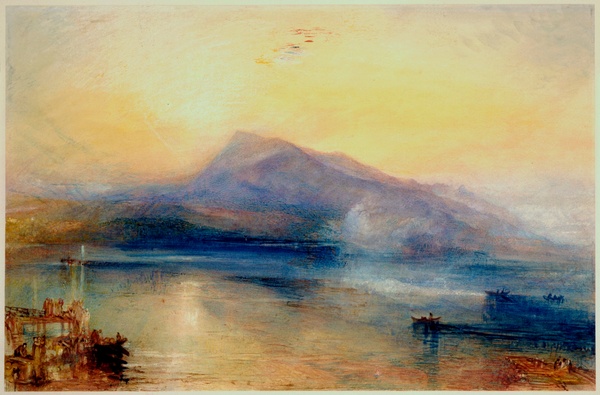
Turner's "The Dark Rigi, the Lake of Lucerne" emerges from this threshold like a whispered prayer, its watercolor washes capturing that breathless moment before dawn breaks. The mountain rises from darkened waters, a silent sentinel witnessing the eternal dialogue between light and shadow. This is where our journey begins—in that pre-dawn stillness where possibility hangs suspended.
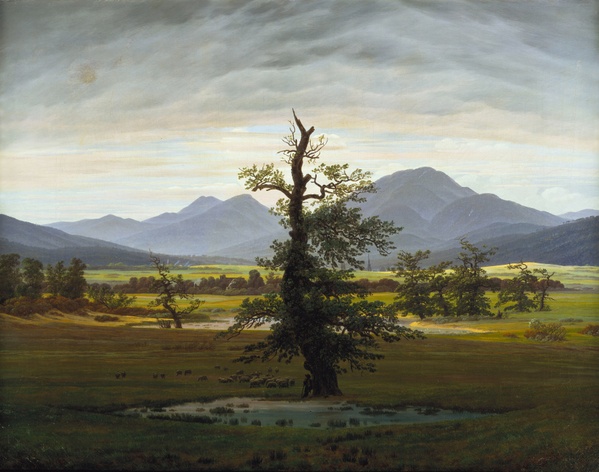
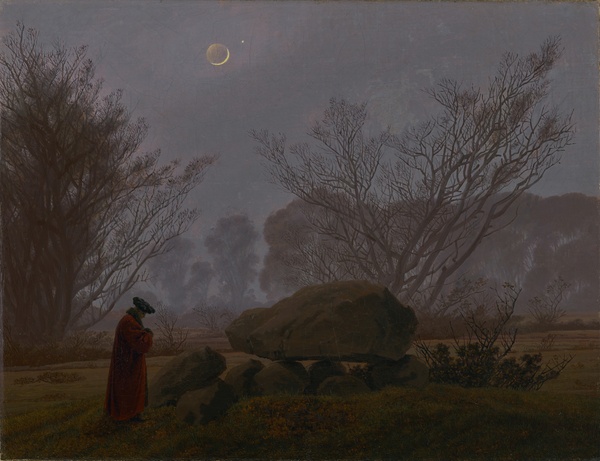
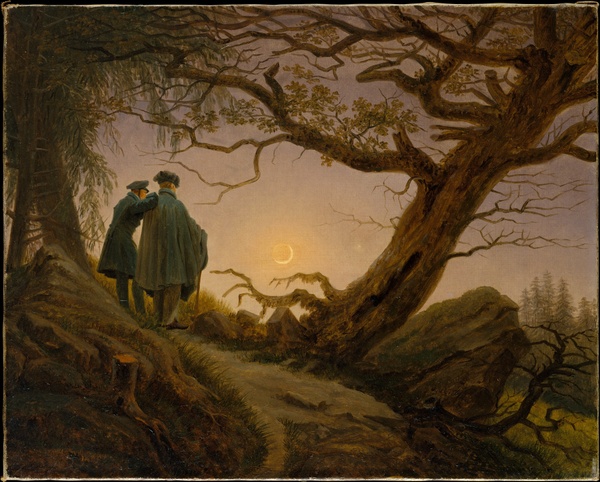
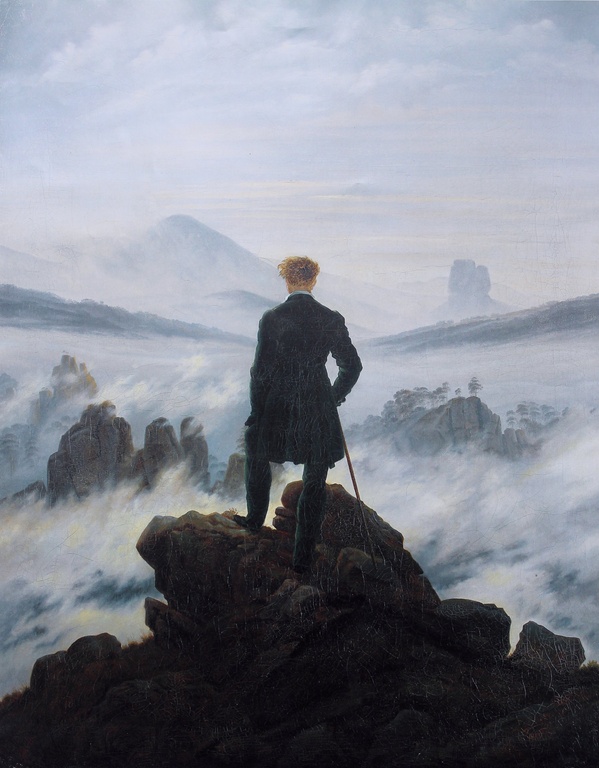
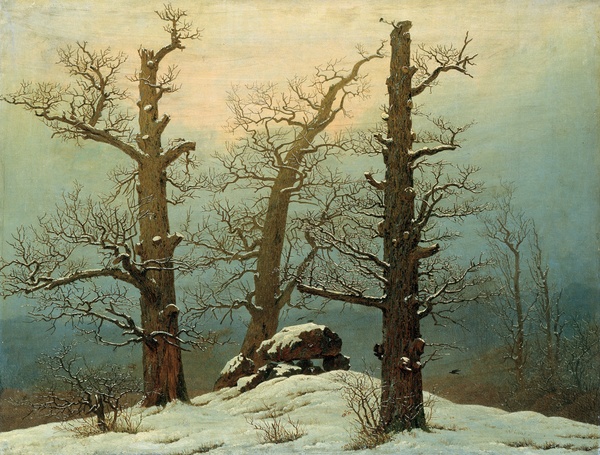
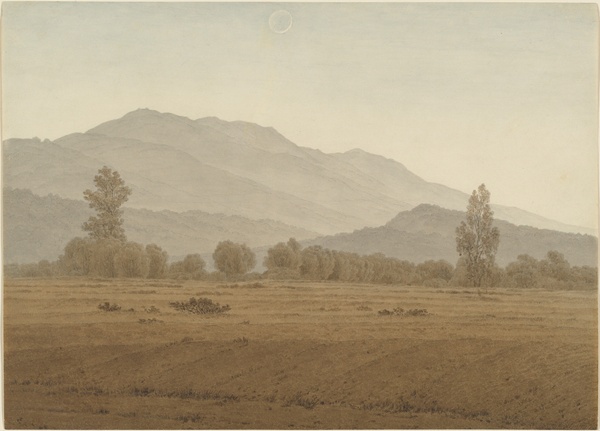
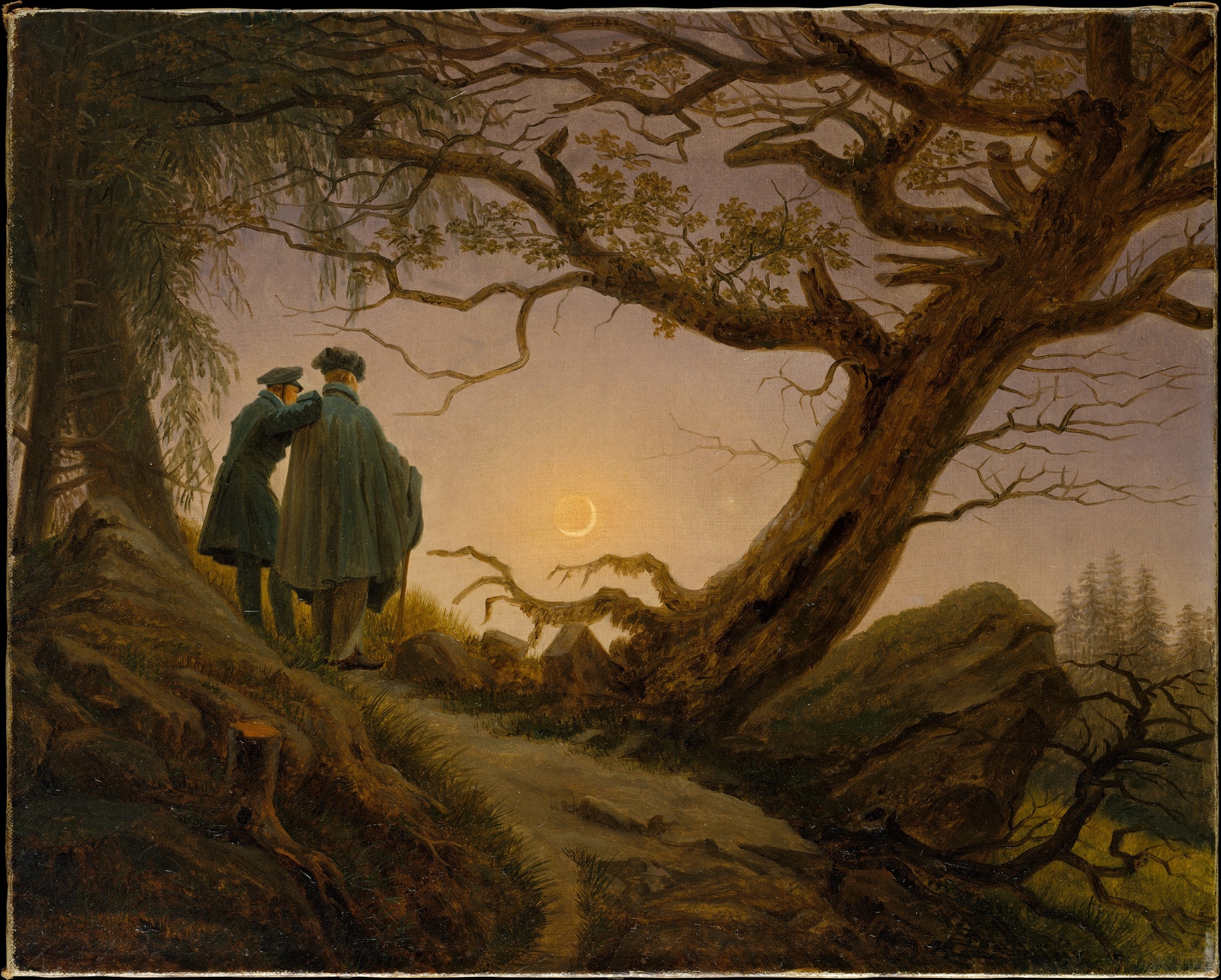
As twilight deepens, we encounter Friedrich's solitary wanderers, those archetypal figures who populate the Romantic imagination. In "A Walk at Dusk," a lone figure contemplates mortality beneath a waxing moon, while "Two Men Contemplating the Moon" presents companionship in contemplation, two souls united in wonder before the celestial mystery. Friedrich understood that dusk amplifies our existential questioning—in "The Lonely Tree," that ancient oak stands sentinel against the vast sky, embodying endurance in the face of cosmic indifference.
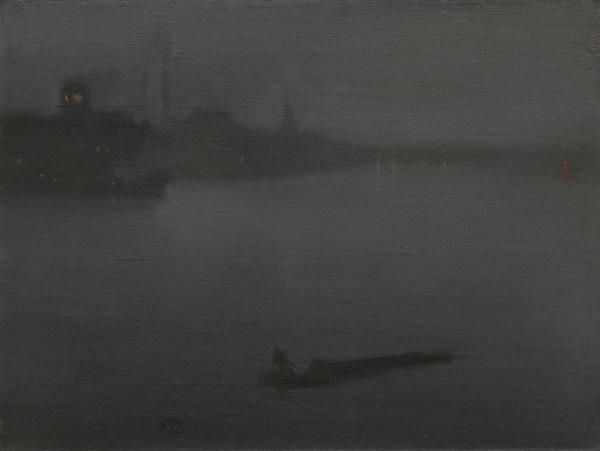
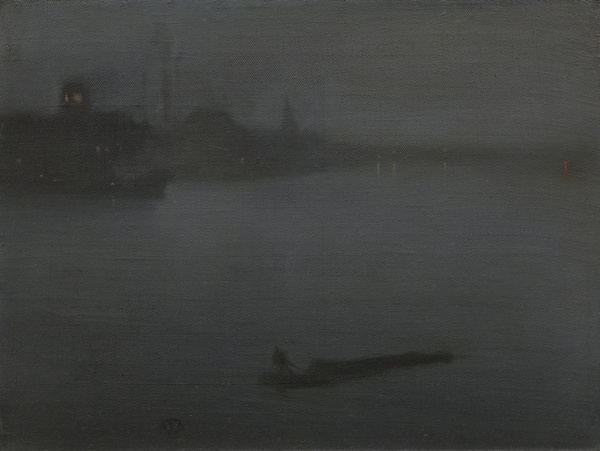
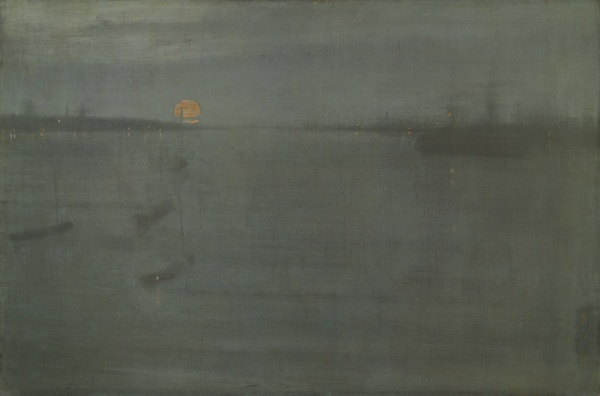
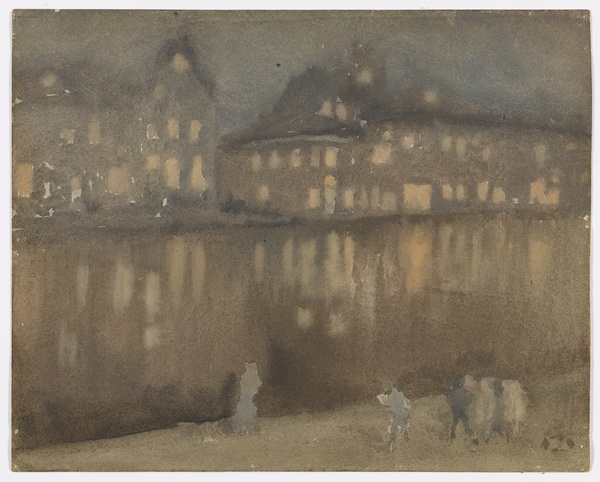
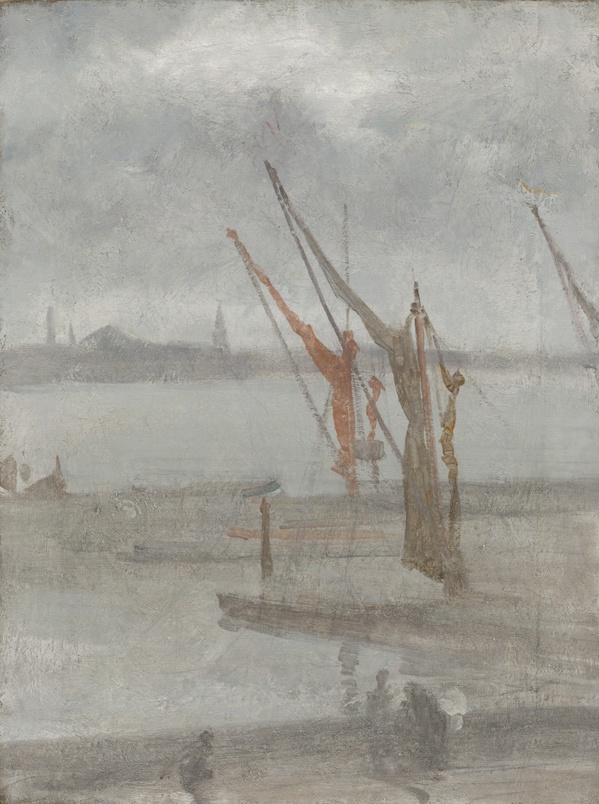
Whistler transforms these twilight meditations into pure atmosphere. His "Nocturne in Blue and Silver" series dissolves the Thames into shimmering abstraction, where gas lamps become jewels scattered across velvet darkness. These are not mere landscapes but symphonies in paint, where color and tone achieve the condition of music. In "Grand Canal, Amsterdam; Nocturne," the watercolor medium allows light to bleed through darkness like memory seeping through consciousness.
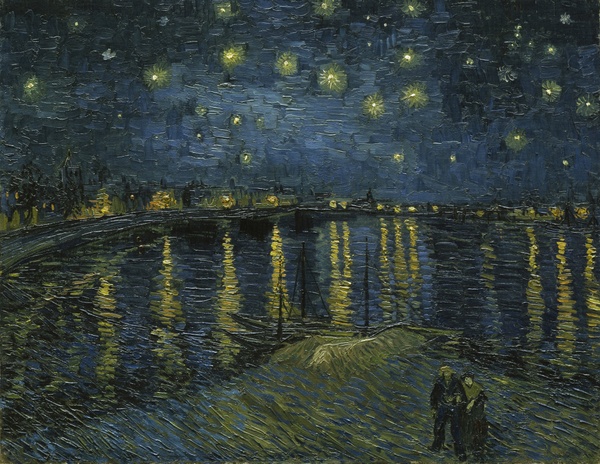
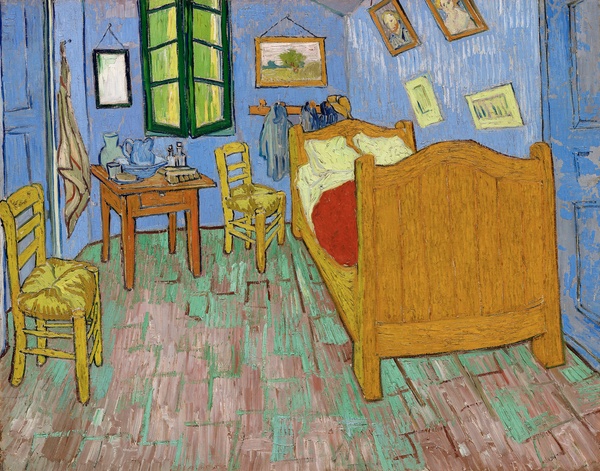
Van Gogh brings electric urgency to the night hours. "Starry Night Over the Rhône" pulsates with cosmic energy, its golden reflections dancing across dark waters while stars wheel overhead in supernatural brightness. His "Café Terrace at Night" transforms a simple street scene into something mystical—yellow light spills from the café like warmth itself, creating an oasis of human connection against the infinite night. Even in the intimacy of "The Bedroom in Arles," shadows speak of solitude and the artist's restless spirit.
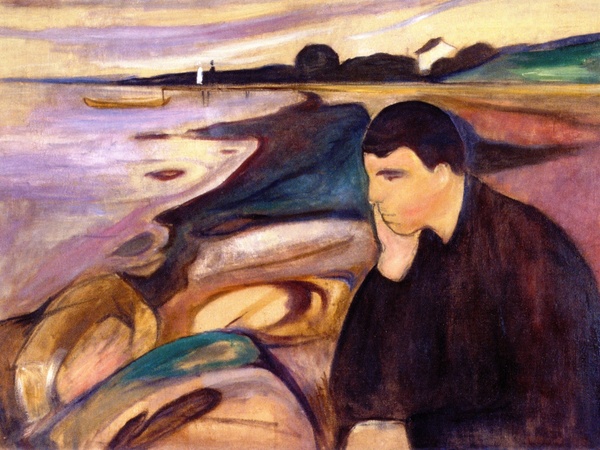
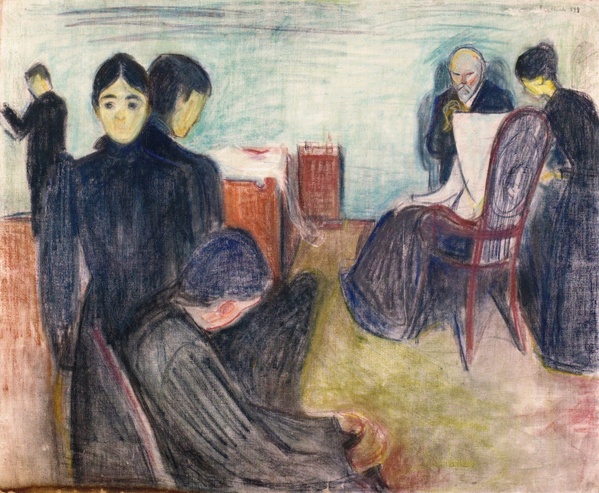
The blue hour carries within it the weight of melancholy, that beautiful sadness that Romantic artists understood as essential to the human condition. Munch's "Melancholy" captures this perfectly—a brooding figure lost in contemplation while distant lovers emphasize his isolation. In "Death in the Sickroom," the twilight of life itself becomes palpable, family members frozen in grief's tableau, each lost in private sorrow.
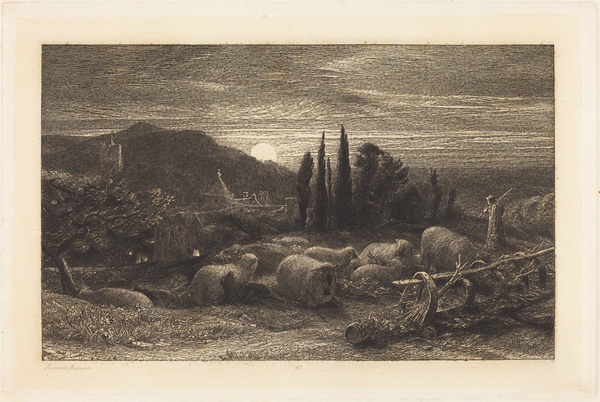
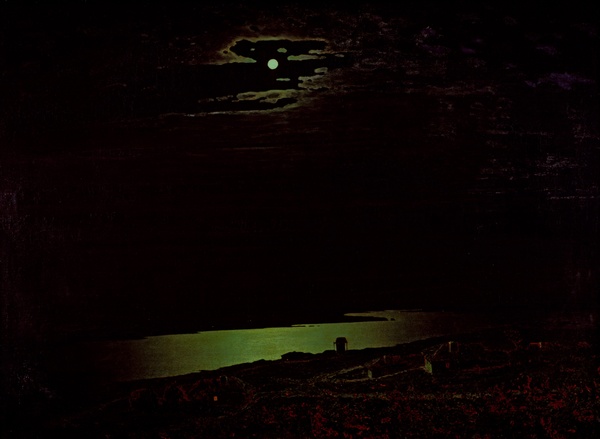
Kuindzhi's "Night on the Dnieper" achieves an almost supernatural luminosity, the moon's reflection creating a silver pathway across dark waters—a metaphor for the soul's journey through uncertainty toward enlightenment. Palmer's "The Rising Moon" offers pastoral comfort, its etched lines creating a sanctuary where shepherd and flock find peace beneath celestial protection.
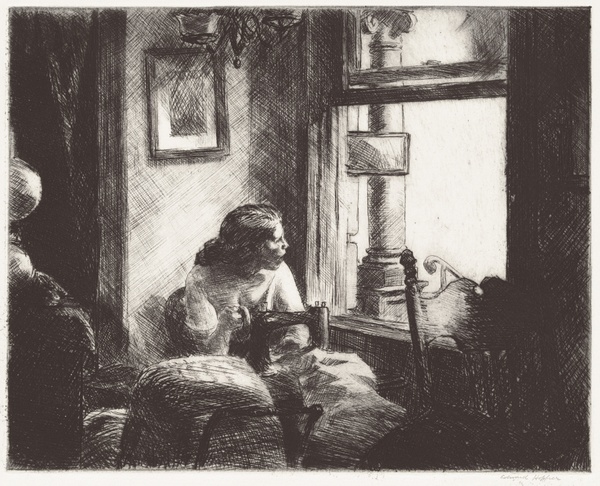
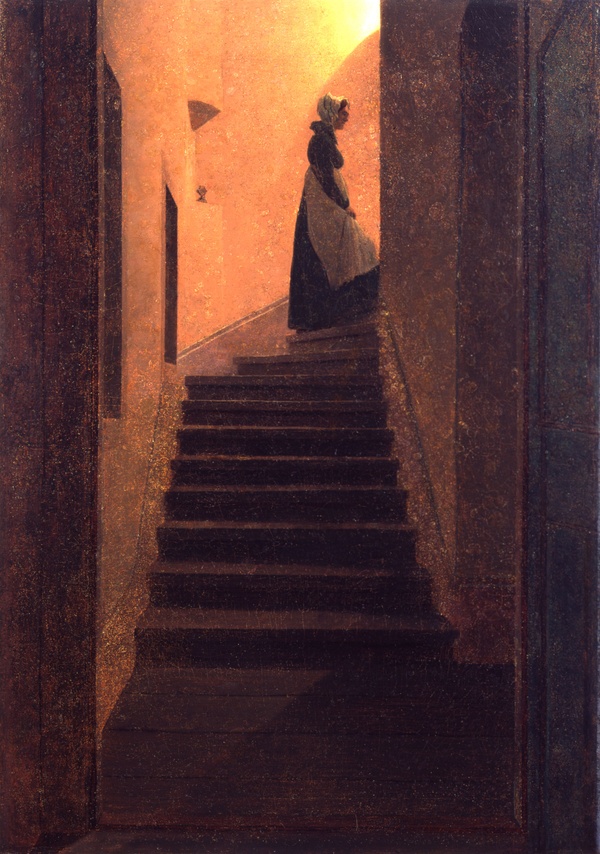
As night deepens into its darkest hours, we find strange comfort in illuminated interiors. Hopper's "East Side Interior" reveals a solitary woman pausing in her work, caught between the domestic sphere and the mysterious world beyond her window. Friedrich's "Lady on the Staircase" shows Caroline ascending toward light, a moving meditation on hope and transcendence.
The blue hour ultimately reveals itself as a mirror of human consciousness—that twilight realm where reason yields to intuition, where the veil between visible and invisible grows thin. These artists understood that in darkness, we discover not absence but presence—the presence of mystery, of beauty, of the infinite questions that make us most profoundly human. In surrendering to shadow and silence, we find ourselves illuminated.